










When it comes to cutting hardwood, selecting the right trimming saw blade is crucial for achieving precise, clean cuts and ensuring efficient work. As a trimming saw blade supplier, I've had the opportunity to witness firsthand the impact that a high - quality saw blade can have on woodworking projects. In this blog, I'll share insights into what makes the best trimming saw blade for cutting hardwood, taking into account various factors such as blade design, tooth configuration, and material quality.
Blade Design
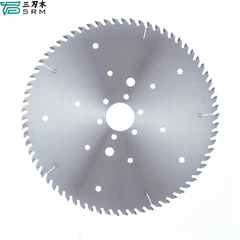
The design of a trimming saw blade plays a significant role in its performance when cutting hardwood. One of the key aspects of blade design is the diameter. Larger diameter blades generally offer greater cutting depth and can handle thicker pieces of hardwood. However, they also require more power to operate. For most trimming applications involving hardwood, blades with diameters ranging from 8 to 12 inches are commonly used. These sizes strike a good balance between cutting capacity and maneuverability.
Another important design factor is the arbor size. The arbor is the central hole in the saw blade that fits onto the saw's spindle. It's essential to choose a blade with an arbor size that matches your saw. Using a blade with an incorrect arbor size can lead to vibrations, poor cutting performance, and even safety hazards.
Tooth Configuration
The tooth configuration of a trimming saw blade is perhaps the most critical factor when it comes to cutting hardwood. There are several types of tooth configurations available, each with its own advantages and disadvantages.
Alternate Top Bevel (ATB): This is one of the most common tooth configurations for trimming saw blades. ATB teeth are beveled alternately to the left and right, which helps to create a clean, smooth cut. The beveled edges of the teeth shear through the wood fibers, reducing tear - out and leaving a finished edge. ATB blades are suitable for a wide range of hardwoods and are often used for general trimming and cross - cutting applications.
Triple Chip Grind (TCG): TCG blades have teeth with a flat top and two beveled edges. This configuration is ideal for cutting hard and abrasive woods, as the flat top of the tooth provides a strong cutting edge, while the beveled edges help to break up the wood chips. TCG blades are commonly used for ripping and grooving operations in hardwoods, as they can handle the high forces involved in these types of cuts. You can learn more about Grooving Saw Blade for specific grooving needs.
Full Rake: Full rake teeth have a positive rake angle, which means that the cutting edge of the tooth is angled forward. This type of tooth configuration is very aggressive and can cut through hardwood quickly. However, full rake blades are more prone to tear - out and may not leave as clean a cut as ATB or TCG blades. They are typically used for rough cutting and ripping operations where speed is more important than a finished edge.
Material Quality
The material used to make the saw blade also has a significant impact on its performance and durability. High - quality saw blades are typically made from carbide - tipped steel. Carbide is an extremely hard and wear - resistant material that can maintain its sharpness for a long time, even when cutting through hard and abrasive woods.
The quality of the carbide tips is crucial. Look for blades with high - grade carbide that has been properly brazed onto the steel body of the blade. A well - brazed carbide tip will stay firmly attached to the blade during cutting, preventing it from chipping or breaking off.
The steel body of the blade also needs to be of good quality. It should be made from a high - strength steel that can withstand the stresses of cutting without warping or bending. A blade with a thin, flexible body can help to reduce vibration and improve cutting performance.


Other Considerations
In addition to blade design, tooth configuration, and material quality, there are a few other factors to consider when choosing a trimming saw blade for cutting hardwood.
Kerf Width: The kerf width is the thickness of the cut made by the saw blade. A narrow kerf blade requires less power to operate and produces less waste, as it removes less wood. However, narrow kerf blades may be more prone to binding and may not be as durable as wider kerf blades.
Number of Teeth: The number of teeth on a saw blade affects the quality of the cut and the cutting speed. Blades with more teeth generally produce a smoother, cleaner cut, but they may cut more slowly. Blades with fewer teeth are more aggressive and can cut through hardwood more quickly, but they may leave a rougher finish.
Our Product Range
As a trimming saw blade supplier, we offer a wide range of high - quality trimming saw blades designed specifically for cutting hardwood. Our Trimming Saw Blade selection includes blades with different tooth configurations, diameters, and kerf widths to meet the diverse needs of our customers.
We also offer Frame Saw Blade which are suitable for larger - scale woodworking projects. Our frame saw blades are made from high - quality materials and feature advanced tooth configurations to ensure clean, efficient cuts in hardwood.
Conclusion
Choosing the best trimming saw blade for cutting hardwood requires careful consideration of several factors, including blade design, tooth configuration, material quality, and other practical considerations. By understanding these factors and selecting the right blade for your specific application, you can achieve precise, clean cuts in hardwood and improve the efficiency of your woodworking projects.
If you're in the market for a high - quality trimming saw blade for cutting hardwood, we invite you to explore our product range. Our team of experts is always available to help you choose the right blade for your needs. Contact us today to start a conversation about your woodworking requirements and let's find the perfect trimming saw blade together.
References
- Woodworking Machinery Handbook, 3rd Edition
- Modern Woodworking Techniques and Tools, 2nd Edition
- Saw Blade Technology and Applications, 4th Edition


