










What is the difference between a circular wood saw and a circular panel saw?
In the world of woodworking and cutting machinery, circular wood saws and circular panel saws are two essential tools that serve distinct purposes. As a circular wood saw supplier, I've had the opportunity to work closely with these machines and understand their unique features and applications. In this blog post, I'll delve into the differences between these two types of saws, helping you make an informed decision when choosing the right tool for your woodworking projects.


Design and Structure
Circular wood saws are typically designed for general woodcutting tasks. They are compact and portable, making them suitable for a variety of jobs, from small DIY projects to professional woodworking. The circular blade of a wood saw is usually mounted on a motor-driven arbor, and the saw is often equipped with a base or table for stability. The blade rotates at high speed, allowing for quick and efficient cutting of wood.
On the other hand, circular panel saws are specifically designed for cutting large panels of wood, such as plywood, MDF, and particleboard. These saws are larger and more stationary than circular wood saws, and they often feature a sliding table or a large cutting surface. The blade of a circular panel saw is usually larger in diameter, which allows for a wider cutting capacity. The saw is also equipped with a fence or guide to ensure accurate and straight cuts.
Cutting Capacity
One of the main differences between circular wood saws and circular panel saws is their cutting capacity. Circular wood saws are generally suitable for cutting smaller pieces of wood, such as boards, planks, and trim. They can handle wood thicknesses ranging from a few millimeters to several inches, depending on the size and power of the saw.
Circular panel saws, on the other hand, are designed to cut large panels of wood. They can handle panel sizes up to several feet in length and width, making them ideal for cutting plywood, MDF, and particleboard. The cutting capacity of a circular panel saw is typically much larger than that of a circular wood saw, allowing for more efficient and precise cutting of large panels.
Cutting Accuracy
Another important difference between circular wood saws and circular panel saws is their cutting accuracy. Circular wood saws are generally less accurate than circular panel saws, especially when it comes to cutting large panels. This is because circular wood saws are often handheld or mounted on a small base, which can make it difficult to maintain a straight and accurate cut.
Circular panel saws, on the other hand, are designed for high-precision cutting. They are equipped with a fence or guide to ensure straight and accurate cuts, and they often feature a laser guide or other alignment tools to help you position the panel correctly. The large cutting surface and sliding table of a circular panel saw also make it easier to handle large panels and ensure accurate cuts.
Blade Types
The type of blade used in a circular wood saw and a circular panel saw can also vary. Circular wood saws typically use a variety of blade types, depending on the type of wood and the cutting task. For example, a crosscut blade is designed for cutting across the grain of the wood, while a rip blade is designed for cutting along the grain. There are also specialty blades available for cutting different types of wood, such as hardwoods, softwoods, and laminates.
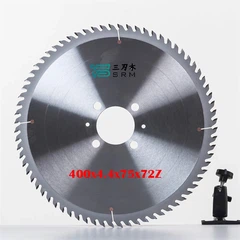
Circular panel saws, on the other hand, usually use a specific type of blade designed for cutting large panels of wood. These blades are typically larger in diameter and have a higher tooth count, which allows for a smoother and more precise cut. Some circular panel saws also use a diamond blade for cutting hard materials, such as stone and ceramic.
If you're interested in exploring the different blade options for circular saws, you can check out our Saw Blade for Sliding Table Machine, Diamond Blade for Circular Saw, and Frame Saw Blade.
Applications
Circular wood saws are versatile tools that can be used for a variety of woodworking tasks, including cutting boards, planks, and trim, as well as making crosscuts, rip cuts, and bevel cuts. They are also commonly used for DIY projects, such as building furniture, cabinets, and shelves.
Circular panel saws, on the other hand, are primarily used for cutting large panels of wood, such as plywood, MDF, and particleboard. They are commonly used in the furniture manufacturing industry, as well as in construction and carpentry. Circular panel saws are also used for cutting large panels of other materials, such as plastic and metal.
Safety Considerations
Both circular wood saws and circular panel saws can be dangerous tools if not used properly. It's important to follow all safety guidelines and wear appropriate safety gear, such as safety glasses, ear protection, and a dust mask. When using a circular wood saw, it's important to keep your hands and fingers away from the blade, and to use a push stick or other tool to guide the wood through the saw. When using a circular panel saw, it's important to ensure that the panel is properly secured and that the saw is set up correctly.
Conclusion
In conclusion, circular wood saws and circular panel saws are two different types of saws that serve distinct purposes. Circular wood saws are versatile tools that are suitable for a variety of woodworking tasks, while circular panel saws are specifically designed for cutting large panels of wood. When choosing between these two types of saws, it's important to consider your specific needs and the type of woodworking projects you'll be working on.
If you're in the market for a circular wood saw, I encourage you to contact us to discuss your requirements. Our team of experts can help you choose the right saw for your needs and provide you with the support and guidance you need to get the most out of your saw. We offer a wide range of circular wood saws and accessories, and we're committed to providing our customers with the highest quality products and services.
References
- Woodworking Machinery Handbook
- Circular Saw Safety Guidelines
- Woodworking Magazine Articles


