



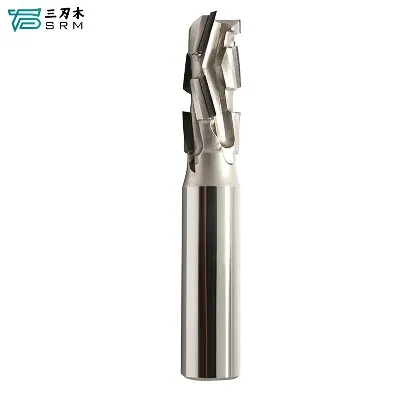





As a supplier of O Flute Router Bits, I've witnessed firsthand the importance of understanding the nuances of these tools in the woodworking and machining industries. One critical aspect that often comes under scrutiny is the effect of the flute twist on the cutting force of an O Flute Router Bit. In this blog, I'll delve into this topic, exploring the science behind it and its practical implications for users.
Understanding the Basics of O Flute Router Bits
Before we dive into the effect of flute twist on cutting force, let's briefly review what an O Flute Router Bit is. O Flute Router Bits are a type of cutting tool commonly used in woodworking, plastic machining, and other materials. They are characterized by their unique flute design, which resembles the letter "O." This design offers several advantages, including efficient chip evacuation, reduced tear - out, and improved surface finish.


The flute twist, also known as the helix angle, is the angle at which the flutes of the router bit are twisted around the bit's axis. It plays a crucial role in determining how the bit interacts with the material during the cutting process.
The Science Behind Flute Twist and Cutting Force
The cutting force is the force required to remove material from the workpiece. It is influenced by several factors, including the material properties, cutting speed, feed rate, and the geometry of the cutting tool, such as the flute twist.
A higher flute twist angle generally results in a more aggressive cutting action. When the helix angle is increased, the cutting edges of the router bit enter and exit the material more smoothly. This reduces the amount of time the cutting edge is in contact with the material, which in turn reduces the cutting force. For example, a router bit with a high helix angle can slice through the material like a hot knife through butter, requiring less force to achieve the same amount of material removal.
On the other hand, a lower flute twist angle provides more support to the cutting edge. This can be beneficial when machining hard or brittle materials, as it helps to prevent the cutting edge from chipping or breaking. However, the lower helix angle also means that the cutting edge spends more time in contact with the material, increasing the cutting force.
Practical Implications for Users
The choice of flute twist angle can have a significant impact on the performance of the O Flute Router Bit in real - world applications.
In woodworking, for example, when working with softwoods like pine or cedar, a higher flute twist angle (e.g., 45 - 60 degrees) can be advantageous. The reduced cutting force allows for faster feed rates, increasing productivity. Additionally, the smooth cutting action helps to minimize tear - out, resulting in a better - looking finished product.
When machining hardwoods such as oak or maple, a lower flute twist angle (e.g., 30 - 40 degrees) may be more appropriate. The increased support for the cutting edge helps to prevent it from dulling or breaking prematurely, even when dealing with the tougher material. Although the cutting force is higher, the trade - off is a longer - lasting and more reliable cutting tool.
In the plastic machining industry, the choice of flute twist angle also depends on the type of plastic. For soft plastics like polypropylene or polyethylene, a higher helix angle can improve the cutting efficiency. For harder plastics like acrylic or polycarbonate, a lower helix angle may be necessary to ensure the integrity of the cutting edge.
Our Product Range and Flute Twist Options
As a supplier of O Flute Router Bits, we offer a wide range of products with different flute twist angles to meet the diverse needs of our customers. Whether you're a professional woodworker, a plastic fabricator, or a hobbyist, we have the right router bit for your project.
In addition to our O Flute Router Bits, we also offer other types of cutting tools, such as Compression Bits, Milling Bit for Neon Strip, and Straight Router Bit. Each of these products is designed with precision and quality in mind, ensuring optimal performance in your machining operations.
The Impact of Flute Twist on Tool Life
Another important aspect to consider is the effect of flute twist on the tool life of the O Flute Router Bit. A proper choice of flute twist angle can significantly extend the lifespan of the tool.
When the cutting force is reduced due to an appropriate flute twist angle, there is less wear and tear on the cutting edges. This means that the router bit can maintain its sharpness for a longer period, reducing the frequency of tool changes. In a production environment, this can lead to significant cost savings in terms of tool replacement and downtime.
Conversely, if the flute twist angle is not suitable for the material being machined, the cutting edges may experience excessive wear, chipping, or breakage. This not only shortens the tool life but can also result in poor - quality machining and increased production costs.
How to Choose the Right Flute Twist Angle
Choosing the right flute twist angle for your O Flute Router Bit depends on several factors:
- Material Type: As mentioned earlier, different materials require different flute twist angles. Soft materials generally benefit from higher helix angles, while hard materials may need lower ones.
- Cutting Speed and Feed Rate: Higher cutting speeds and feed rates may require a more aggressive flute twist angle to maintain efficient cutting. However, it's important to find the right balance to avoid overloading the tool.
- Desired Surface Finish: If a smooth surface finish is required, a higher flute twist angle can help to reduce tear - out and produce a cleaner cut.
Conclusion
The effect of the flute twist on the cutting force of an O Flute Router Bit is a complex but crucial aspect of machining. By understanding the science behind it and considering the practical implications, users can make informed decisions when choosing the right router bit for their projects.
As a supplier, we are committed to providing our customers with high - quality O Flute Router Bits and other cutting tools. Our team of experts is always available to offer advice and support on tool selection and application. If you're interested in learning more about our products or have specific requirements for your machining operations, we encourage you to reach out to us for a consultation. We look forward to working with you to achieve the best results in your projects.
References
- Shaw, M. C. (2005). Metal Cutting Principles. Oxford University Press.
- Trent, E. M., & Wright, P. K. (2000). Metal Cutting. Butterworth - Heinemann.


