



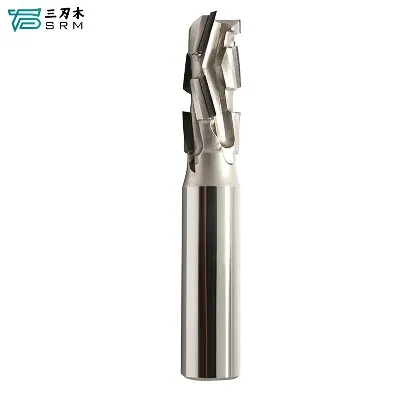





When it comes to milling aluminum, one of the most critical decisions you'll face is choosing between a straight and a spiral aluminum router bit. As a supplier of high - quality Aluminum Router Bits, I've witnessed firsthand the impact this choice can have on the efficiency and quality of the machining process. In this blog, I'll delve into the characteristics, advantages, and disadvantages of both types of router bits to help you make an informed decision.
Straight Router Bits
A straight router bit, as the name suggests, has a straight cutting edge. This design is straightforward and has been a staple in the machining industry for a long time.
Characteristics
- Simple Design: The straight design makes it easy to manufacture and understand. It has a single - point cutting edge that runs parallel to the axis of the bit.
- Precision: Straight router bits are known for their ability to provide precise cuts. They can create sharp corners and straight edges with high accuracy, which is essential for applications where dimensional accuracy is crucial.
Advantages
- Versatility: Straight router bits can be used for a wide range of applications, including grooving, dadoing, and edge profiling. They are suitable for both roughing and finishing operations.
- Cost - Effective: Generally, straight router bits are more affordable than their spiral counterparts. This makes them a popular choice for small - scale operations or those on a tight budget.
- Easy to Sharpen: The straight cutting edge is relatively easy to sharpen, which means you can extend the lifespan of the bit and reduce costs in the long run.
Disadvantages
- Chip Evacuation: One of the main drawbacks of straight router bits is their poor chip evacuation. Since the cutting edge is straight, chips tend to accumulate in the cutting area, which can lead to overheating and damage to the workpiece and the bit itself.
- Limited Cutting Speed: Due to the chip - evacuation issue, straight router bits often require slower cutting speeds to prevent overheating and tool wear. This can result in longer machining times.
If you're interested in learning more about straight router bits, you can visit our Straight Router Bit page.
Spiral Router Bits
Spiral router bits, on the other hand, have a helical cutting edge. This design offers several unique benefits compared to straight router bits.
Characteristics
- Helical Cutting Edge: The spiral shape of the cutting edge allows for continuous cutting and better chip evacuation. As the bit rotates, the chips are carried away from the cutting area along the spiral flutes.
- Smoother Cuts: The helical design also results in smoother cuts, as the cutting force is distributed more evenly over the cutting edge.
Advantages
- Excellent Chip Evacuation: The spiral flutes effectively remove chips from the cutting area, reducing the risk of overheating and tool wear. This allows for higher cutting speeds and feed rates, which can significantly improve machining efficiency.
- Smooth Surface Finish: Spiral router bits produce a smoother surface finish compared to straight router bits. This is especially important for applications where a high - quality finish is required, such as in the production of furniture or decorative items.
- Reduced Vibration: The helical design helps to reduce vibration during the cutting process, which can improve the overall stability of the machining operation and extend the lifespan of the bit.
Disadvantages
- Higher Cost: Spiral router bits are generally more expensive than straight router bits. This is due to the more complex manufacturing process required to create the helical cutting edge.
- Limited Application for Sharp Corners: While spiral router bits are excellent for creating curved and rounded edges, they may not be as suitable for creating sharp corners as straight router bits.
Which is Better?
The answer to whether a straight or a spiral aluminum router bit is better depends on several factors, including the specific application, the material being machined, and the desired surface finish.
For Roughing Operations
If you're performing roughing operations, such as removing large amounts of material quickly, a spiral router bit is often the better choice. The excellent chip evacuation and ability to handle higher cutting speeds make it ideal for this type of work. You can explore our End Mills for Roughing for more options.
For Finishing Operations
For finishing operations, where precision and a smooth surface finish are crucial, both straight and spiral router bits can be used. Straight router bits are better for creating sharp corners and straight edges, while spiral router bits are better for creating smooth curves and rounded edges.
For Cost - Conscious Projects
If cost is a major concern, a straight router bit may be the better option. It is more affordable and can still provide satisfactory results for many applications.
Conclusion
In conclusion, both straight and spiral aluminum router bits have their own advantages and disadvantages. As a supplier of Aluminum Router Bit, we understand the importance of choosing the right tool for the job. We recommend carefully considering your specific needs and requirements before making a decision.


If you have any questions or need further assistance in selecting the right aluminum router bit for your application, please feel free to reach out to us. We're here to help you make the best choice for your machining needs.
References
- "Machining Handbook" by Industrial Press Inc.
- "Router Bit Basics" by Woodworking Magazine


