








Hey there, woodworking enthusiasts! As a supplier of Step Router Bits, I often get asked if these bits can be used for making dovetail joints. It's a great question, and today, I'm going to dive deep into this topic to give you a clear answer.
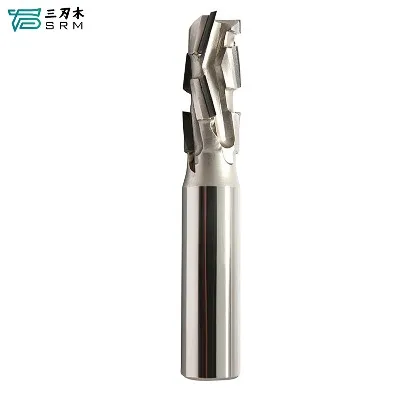
First off, let's talk a bit about what a Step Router Bit is. A Step Router Bit, as the name suggests, has multiple steps or levels on its cutting edge. These bits are incredibly versatile and are commonly used for creating rabbets, dados, and other stepped profiles in wood. You can check out our range of Step Router Bit on our website.
Now, onto dovetail joints. Dovetail joints are one of the most classic and strong woodworking joints out there. They're known for their interlocking design, which provides excellent strength and stability. Traditionally, dovetail joints are cut using hand tools like dovetail saws and chisels. However, with the advent of power tools, many woodworkers are looking for ways to cut dovetail joints more efficiently.


So, can a Step Router Bit be used for making dovetail joints? The short answer is yes, but with some limitations.
The Possibility
A Step Router Bit can be used to create a basic dovetail - like joint. You can use the different steps of the bit to create the angled cuts that are characteristic of a dovetail joint. By carefully adjusting the router and the bit, you can achieve a joint that looks somewhat like a dovetail.
For example, if you have a Step Router Bit with multiple steps at different angles, you can use these steps to cut the angled tails and pins of the dovetail joint. You'll need to make multiple passes with the router, adjusting the depth and position of the bit each time to create the correct shape.
The Limitations
However, there are some significant limitations when using a Step Router Bit for dovetail joints.
Precision: Dovetail joints require a high level of precision. The angles and sizes of the tails and pins need to be exact for the joint to fit together properly. Step Router Bits are not specifically designed for dovetail joints, so achieving the precise angles and measurements can be challenging. Even a small error in the angle or size can result in a joint that doesn't fit well or is weak.
Complexity: Dovetail joints come in different styles and sizes, such as half - blind dovetails, through dovetails, and sliding dovetails. Each style has its own unique requirements, and it can be difficult to use a Step Router Bit to create all these different styles. For example, a half - blind dovetail requires a more complex cutting process to hide the joint on one side, which may be beyond the capabilities of a standard Step Router Bit.
Appearance: The appearance of a dovetail joint cut with a Step Router Bit may not be as aesthetically pleasing as one cut with a dedicated dovetail router bit. Dedicated dovetail bits are designed to create clean, sharp cuts that result in a more professional - looking joint.
Alternatives
If you're serious about making dovetail joints, you might want to consider using dedicated dovetail router bits. These bits are specifically designed for cutting dovetail joints and can provide much better results in terms of precision and appearance.
However, if you already have a Step Router Bit and want to give it a try, here are some tips:
- Practice on scrap wood: Before cutting into your final piece, practice on some scrap wood to get a feel for how the Step Router Bit works and to fine - tune your technique.
- Use a guide: A router guide can help you keep the router in a straight line and ensure that your cuts are accurate.
- Take your time: Making dovetail joints is a precise process, so don't rush. Take your time to make each cut carefully.
In addition to Step Router Bits, we also offer other types of router bits that might be useful for your woodworking projects. For example, our CNC V Bits are great for creating decorative V - shaped grooves, and our Flush Trimming Router Bit With Bearing is perfect for trimming edges and creating smooth surfaces.
If you're interested in purchasing our Step Router Bits or any other router bits, we'd love to hear from you. Whether you're a professional woodworker or a hobbyist, we have the right tools for your needs. Contact us to start a conversation about your woodworking projects and how our products can help you achieve the best results.
References
- Woodworking Magazine. (2023). Guide to Router Bits.
- Fine Woodworking. (2022). Dovetail Joints: Techniques and Tips.


