



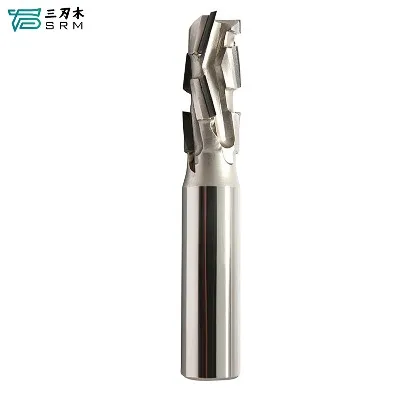

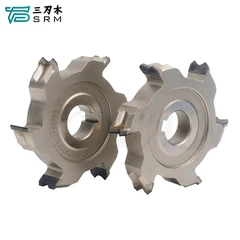
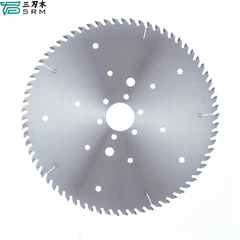


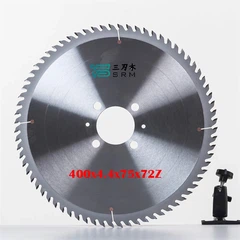


Hey there! As a supplier of compression bits, I often get asked about how to calculate the number of compression bits in a file. It's a question that might seem a bit technical at first, but once you break it down, it's not that complicated. In this blog post, I'm going to walk you through the process step by step.
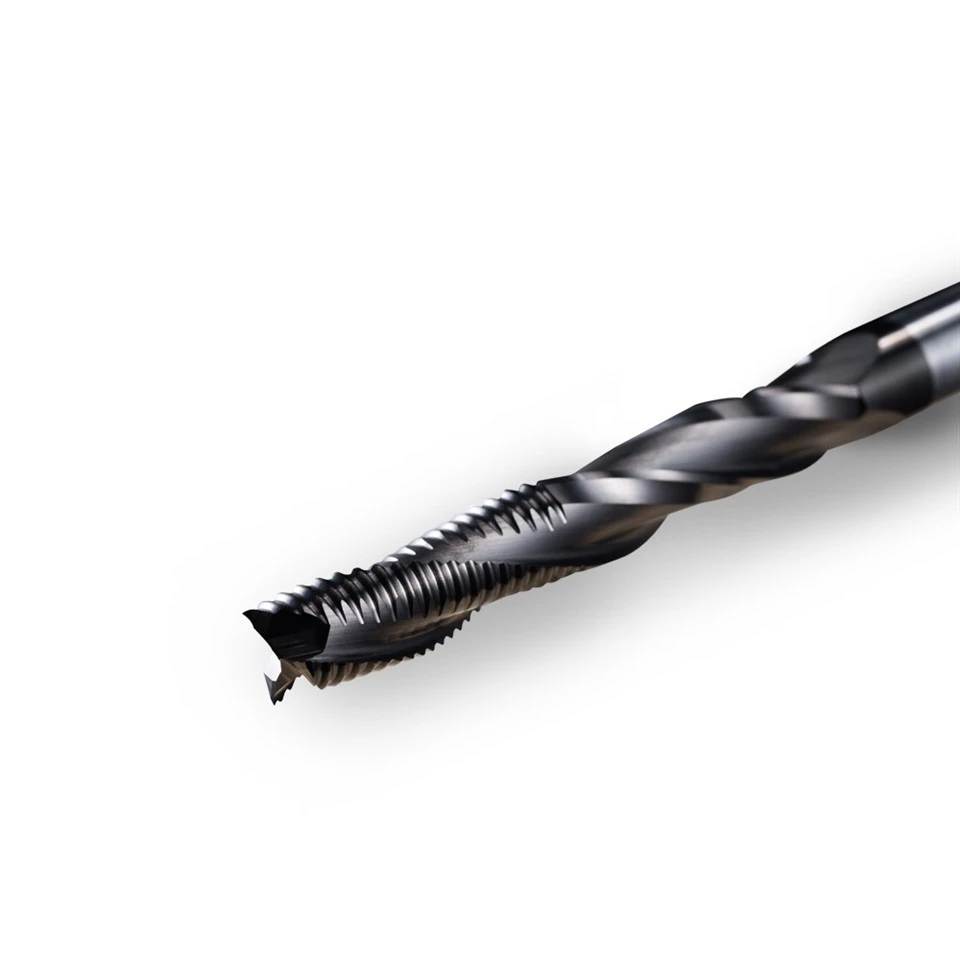
First off, let's understand what compression bits are. Compression bits are used in various industries, especially in woodworking and machining. They're designed to cut and shape materials, and their performance can have a big impact on the quality of the final product. Whether you're using End Mills for Roughing, Ball Nose Router Bit, or Lock Hole Router Bit, knowing how to calculate the number of compression bits you need is crucial.
Understanding the Basics of Compression Bit Calculation
The first thing you need to do is figure out the total area or volume of the material you're going to work on. This will depend on the project you're undertaking. For example, if you're working on a flat wooden board, you'll need to calculate its surface area. If it's a three - dimensional object, you'll need to find its volume.

Let's say you're working on a rectangular wooden board. To calculate the surface area, you use the formula:
[A = l\times w]
where (l) is the length and (w) is the width of the board.
Once you have the area or volume, you need to consider the cutting capacity of a single compression bit. This is usually specified by the manufacturer. The cutting capacity tells you how much material a bit can cut in a given time or with a certain number of passes.
Factors Affecting Compression Bit Calculation
There are several factors that can affect the number of compression bits you need. One of the most important factors is the type of material you're working with. Different materials have different hardness and density, which means they require different cutting forces and speeds. For example, cutting through hardwood will be more difficult than cutting through softwood, so you might need more compression bits or use them at a slower speed.
The complexity of the design also plays a role. If you're creating a simple, straight - cut design, you might need fewer bits compared to a design with intricate curves and patterns. Intricate designs often require more precise cutting, which might mean using more bits or making multiple passes with the same bit.
Another factor is the quality of the compression bits. High - quality bits are usually more efficient and can cut through materials faster and with less wear and tear. Cheaper bits might require more frequent replacements, which can affect the overall number of bits you need for a project.
Step - by - Step Calculation Process
Let's go through a step - by - step example of how to calculate the number of compression bits for a project.
Step 1: Determine the Project Requirements
Let's assume you're working on a wooden cabinet door. The door has a length of 36 inches and a width of 24 inches. So, the surface area of the door is:
[A=36\times24 = 864\space square\space inches]
Step 2: Check the Cutting Capacity of the Compression Bit
Let's say the compression bit you're using has a cutting capacity of 100 square inches per pass. This means that in one pass, the bit can cut through 100 square inches of the material.
Step 3: Calculate the Number of Passes
To find out how many passes you need to make to cover the entire surface area of the door, you divide the total surface area by the cutting capacity per pass.
[Number\space of\space passes=\frac{864}{100}=8.64]
Since you can't make a fraction of a pass, you'll need to make 9 passes.
Step 4: Consider Bit Wear and Tear
Over time, compression bits will wear out. You need to factor in the expected wear and tear of the bits. A good rule of thumb is to add an extra 10 - 20% to the number of passes to account for bit replacement. So, if we add 15% to the 9 passes, we get:
[9\times(1 + 0.15)=9\times1.15 = 10.35]
Since you can't have a fraction of a bit, you'll need to round up to 11 passes.
Step 5: Determine the Number of Bits
If you assume that each bit can make 3 passes before it needs to be replaced, then the number of bits you need is:
[Number\space of\space bits=\frac{11}{3}\approx3.67]
Again, rounding up, you'll need 4 compression bits for this project.
Adjusting the Calculation for Different Projects
If you're working on a three - dimensional project, the calculation becomes a bit more complex. You'll need to calculate the volume of the object and consider the depth of cut of the compression bit.
For example, if you're creating a wooden box with a length of 12 inches, a width of 8 inches, and a height of 6 inches, the volume of the box is:
[V=l\times w\times h=12\times8\times6 = 576\space cubic\space inches]
Let's say the compression bit has a cutting volume capacity of 50 cubic inches per pass. The number of passes is:
[Number\space of\space passes=\frac{576}{50}=11.52]
Rounding up, you'll need 12 passes. Factoring in wear and tear, say an extra 15%, we get (12\times1.15 = 13.8), rounding up to 14 passes.
If each bit can make 4 passes before replacement, then the number of bits is (\frac{14}{4}=3.5), rounding up to 4 bits.
Tips for Optimizing Compression Bit Usage
- Proper Maintenance: Keep your compression bits clean and sharp. Regularly clean the bits after use and sharpen them when they start to show signs of wear. This will extend their lifespan and reduce the number of bits you need to replace.
- Use the Right Speed and Feed Rate: Using the correct speed and feed rate for your compression bits is essential. Running the bits too fast or too slow can cause excessive wear and tear or poor cutting quality.
- Plan Your Cuts: Before you start cutting, plan out your cuts carefully. This can help you minimize the number of passes and use the bits more efficiently.
Conclusion
Calculating the number of compression bits in a file or for a project is an important skill for anyone working in the woodworking or machining industry. By understanding the basics of area or volume calculation, considering the cutting capacity of the bits, and factoring in various project - related factors, you can accurately determine the number of bits you need.
If you're in the market for high - quality compression bits, we're here to help. We offer a wide range of compression bits, including End Mills for Roughing, Ball Nose Router Bit, and Lock Hole Router Bit. Whether you're a professional woodworker or a DIY enthusiast, we have the bits to meet your needs. If you have any questions about compression bit calculation or need advice on which bits are best for your project, don't hesitate to reach out and start a procurement discussion. We're always happy to help you make the right choice for your projects.
References
- Woodworking Machinery Handbook
- Compression Bit Manufacturer's Specifications


