








Hey there, fellow drill enthusiasts! As a drill bit supplier, I've seen firsthand the ins and outs of deep - hole drilling. It's a task that comes with its fair share of challenges, but fear not, because I'm here to break down those issues and offer up some solid solutions.
Let's start by talking about what deep - hole drilling actually is. It's the process of drilling holes where the depth is significantly greater than the diameter. This can be anything from a few inches to several feet deep, depending on the application. Whether you're working on a construction project, automotive manufacturing, or even aerospace engineering, deep - hole drilling plays a crucial role.
One of the biggest challenges in deep - hole drilling is heat generation. When you're drilling deep, the friction between the drill bit and the workpiece creates a ton of heat. This heat can cause the drill bit to wear out quickly, and it can also affect the integrity of the workpiece. The high temperature can lead to thermal expansion, which might result in inaccurate hole dimensions. And let's not forget that excessive heat can even cause the material of the drill bit to soften, reducing its cutting ability.
Another major challenge is chip evacuation. As you drill deeper, the chips produced by the cutting action need to be removed from the hole. If they aren't, they can get stuck in the hole, causing the drill bit to bind. This not only slows down the drilling process but can also damage the drill bit and the workpiece. In some cases, the chips can build up so much that they cause the drill bit to break.


Tool wear is also a significant issue. The constant contact between the drill bit and the workpiece wears down the cutting edges of the bit. In deep - hole drilling, this wear is even more pronounced because the drill bit is under more stress for a longer period. The worn - out drill bit will have a reduced cutting efficiency, and it may produce rough hole surfaces, which can be a big problem in applications where precision is key.
Now, let's move on to the solutions. When it comes to heat generation, using a proper coolant is essential. Coolants help to dissipate the heat generated during drilling. They also lubricate the drill bit, reducing friction and wear. There are different types of coolants available, such as water - based and oil - based coolants. Water - based coolants are generally more environmentally friendly and cost - effective, while oil - based coolants offer better lubrication. You can choose the one that suits your specific drilling requirements.
For chip evacuation, one solution is to use a drill bit with proper chip flutes. The flutes are the spiral grooves on the drill bit that help to carry the chips out of the hole. Drill bits with deeper and wider flutes are better at chip evacuation. Some advanced drill bits even have special designs to enhance chip flow. For example, Countersink Drill Bit often have well - designed flutes that can effectively remove chips from the hole, making them a great option for deep - hole drilling in certain applications.
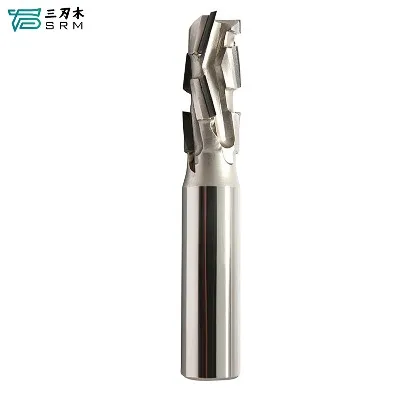
To deal with tool wear, selecting the right drill bit material is crucial. High - speed steel (HSS) drill bits are a popular choice for general - purpose drilling. They are relatively inexpensive and can handle a wide range of materials. However, for more demanding deep - hole drilling applications, carbide drill bits are a better option. Carbide is extremely hard and wear - resistant, which means it can maintain its cutting edge for a longer time. Solid Carbide Dowel Drill Bit is a prime example of a high - quality carbide drill bit that can withstand the rigors of deep - hole drilling.
In addition to the above, proper drilling parameters also play a vital role. You need to adjust the drilling speed and feed rate according to the material you're drilling and the type of drill bit you're using. A too - high speed can cause excessive heat and wear, while a too - low speed may result in inefficient cutting. The feed rate should be set so that the drill bit can cut through the material smoothly without causing too much stress.
Let's talk about some specific types of drill bits that are well - suited for deep - hole drilling. Forstner Drill Bit is known for its ability to drill flat - bottomed holes. It has a unique design that allows it to cut cleanly through the material, and it can be a great choice for deep - hole drilling in wood and some softer metals. The Forstner drill bit's cutting edges are designed to prevent tearing of the material, resulting in a smooth hole surface.
Another option is the gun drill. Gun drills are specifically designed for deep - hole drilling. They have a single flute and a coolant hole running through the center. The coolant is forced through the hole to the cutting edge, which helps with both heat dissipation and chip evacuation. Gun drills can achieve very high precision and are commonly used in the aerospace and automotive industries.
As a drill bit supplier, I understand that every drilling job is unique. That's why we offer a wide range of drill bits to meet different needs. Whether you're a professional contractor or a DIY enthusiast, we have the right drill bit for you. If you're facing challenges with deep - hole drilling or just want to explore different drill bit options, don't hesitate to reach out. We can provide you with expert advice and high - quality products.
If you're interested in purchasing drill bits for your deep - hole drilling projects, feel free to contact us. We're always ready to have a chat about your specific requirements and help you find the best drill bit solutions.
In conclusion, deep - hole drilling is a challenging but achievable task. By understanding the challenges and implementing the right solutions, you can improve the efficiency and quality of your drilling operations. With the right drill bit and proper techniques, you'll be able to drill deep holes with precision and ease.
References
- "Machining Fundamentals" by John A. Schey
- "Drilling Technology Handbook" by various industry experts


