



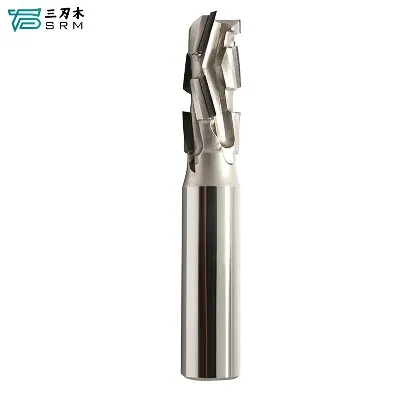





In the realm of woodworking and machining, aluminum router bits play a crucial role in achieving precise and efficient cuts. Among the various design parameters of these router bits, the helix angle stands out as a significant factor that profoundly influences chip formation. As a trusted supplier of high - quality aluminum router bits, I have witnessed firsthand the impact of the helix angle on the performance of these tools. In this blog, we will delve into the effects of the helix angle on the chip formation of an aluminum router bit.
Understanding the Helix Angle
The helix angle of a router bit refers to the angle formed between the cutting edge of the bit and a line parallel to the bit's axis. It is an essential geometric feature that determines how the bit interacts with the material being cut. Router bits come in a range of helix angles, typically varying from low to high. Low helix angles are generally in the range of 10 - 20 degrees, medium helix angles are around 25 - 35 degrees, and high helix angles can be 40 degrees or more.
Chip Formation Basics
Before we explore the effect of the helix angle, it's important to understand the process of chip formation. When a router bit cuts through aluminum, the cutting edge shears off small pieces of the material, which are then removed from the cutting zone. These small pieces are known as chips. The way these chips are formed and removed has a direct impact on the quality of the cut, the tool life, and the overall efficiency of the machining process.
Impact of Helix Angle on Chip Formation
Low Helix Angles
Router bits with low helix angles have a relatively straight cutting edge. When cutting aluminum, the chips formed are often long and continuous. This is because the low helix angle causes the material to be removed in a more linear fashion. While long chips can sometimes indicate a smooth cutting process, they can also pose problems. Long chips can get tangled around the bit, leading to clogging and potentially causing the bit to overheat. This can result in a poor - quality cut, increased wear on the bit, and even damage to the workpiece.
For applications where a clean, precise cut is required, low helix angle bits may not be the best choice. However, in some cases, such as roughing operations where the focus is on quickly removing a large amount of material, low helix angle bits can be effective. They can provide a relatively high chip - removal rate, but at the cost of potentially less - than - ideal chip management.
Medium Helix Angles
Medium helix angle router bits strike a balance between chip formation and chip removal. The chips formed are shorter and more manageable compared to those produced by low helix angle bits. The medium helix angle helps to break up the chips as they are formed, reducing the likelihood of clogging. This results in a cleaner cut and less wear on the bit.
Medium helix angle bits are versatile and can be used in a wide range of applications, from general woodworking to more precise aluminum machining. They are often a popular choice for both professional woodworkers and hobbyists who need a bit that can handle different types of cuts with good chip control.
High Helix Angles
Router bits with high helix angles are designed to excel at chip removal. The steep angle of the cutting edge causes the chips to be ejected from the cutting zone more quickly. This results in shorter, more fragmented chips that are less likely to clog the bit. High helix angle bits are particularly effective when cutting soft materials like aluminum, as they can prevent the material from sticking to the bit and causing heat buildup.


However, high helix angle bits may not be suitable for all applications. They can sometimes produce a rougher surface finish compared to medium helix angle bits, as the aggressive chip - removal process can cause more vibration. But for applications where chip removal is the primary concern, such as high - speed machining or cutting thick aluminum sheets, high helix angle bits are the go - to choice.
Practical Applications and Examples
Let's consider some real - world scenarios where the helix angle of an aluminum router bit makes a difference.
Furniture Manufacturing
In furniture manufacturing, precision and a smooth finish are crucial. For cutting aluminum components used in modern furniture designs, a medium helix angle bit would be a good choice. The Straight Bit with Chip Breaker from our product range, with its medium helix angle, can provide clean cuts and effective chip management. This ensures that the aluminum parts fit together perfectly and have a professional appearance.
Sign Making
Sign makers often work with aluminum sheets to create eye - catching signs. When cutting intricate shapes and letters, a high helix angle bit can be beneficial. The Compression Bits we offer, with their high helix angles, can quickly remove chips and prevent the material from melting or deforming during the cutting process. This results in sharp, clean edges and a high - quality finished sign.
Door and Window Manufacturing
In the door and window manufacturing industry, where large amounts of aluminum need to be cut, low helix angle bits can be used for roughing operations to quickly remove material. However, for the final finishing cuts, a medium or high helix angle bit should be used to ensure a smooth surface and proper chip removal. Our Lock Hole Router Bit can be used in these applications to create precise lock holes with good chip control.
Conclusion
The helix angle of an aluminum router bit has a significant impact on chip formation. By understanding the different effects of low, medium, and high helix angles, woodworkers and machinists can choose the right bit for their specific applications. As a supplier of aluminum router bits, we are committed to providing high - quality products that are designed to optimize chip formation and performance.
If you are in the market for aluminum router bits and want to discuss your specific needs, we invite you to reach out to us. Our team of experts is ready to assist you in selecting the right router bits for your projects. Whether you need a bit for a small - scale hobby project or a large - scale industrial application, we have the solutions to meet your requirements.
References
- Smith, J. (2018). Handbook of Router Bit Technology. Woodworking Press.
- Johnson, A. (2019). Machining Aluminum: Best Practices. Manufacturing Journal.
- Brown, C. (2020). Understanding Chip Formation in Router Bits. Tooling Magazine.


