



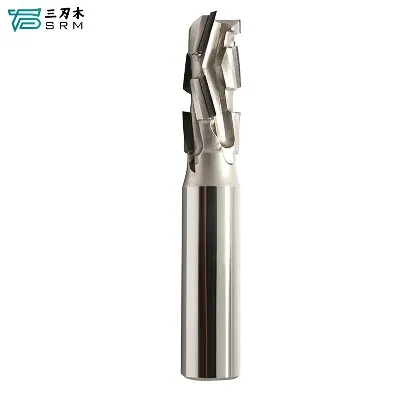





Hey there, fellow woodworkers and DIY enthusiasts! As a supplier of Step Router Bits, I often get asked about the recommended feed rate for these nifty tools. It's a crucial question because getting the feed rate right can make a huge difference in the quality of your work and the lifespan of your router bits. So, let's dive in and explore this topic in detail.
First off, what exactly is a Step Router Bit? Well, it's a specialized type of router bit that has multiple cutting edges at different depths. This allows you to create steps, dadoes, and rabbets in a single pass, which can save you a lot of time and effort. Step Router Bits are commonly used in woodworking projects such as cabinet making, furniture construction, and trim work.


Now, let's talk about feed rate. The feed rate refers to the speed at which you move the router bit through the material. It's usually measured in inches per minute (IPM) or millimeters per minute (mm/min). The ideal feed rate depends on several factors, including the type of material you're working with, the size and design of the router bit, and the power of your router.
Factors Affecting Feed Rate
Material Type
Different materials have different hardness and density, which can affect the feed rate. For example, softwoods like pine and cedar are easier to cut through than hardwoods like oak and maple. As a general rule, you can use a higher feed rate when working with softwoods and a lower feed rate when working with hardwoods. Here's a rough guide:
- Softwoods: 100 - 200 IPM (254 - 508 mm/min)
- Hardwoods: 50 - 100 IPM (127 - 254 mm/min)
Keep in mind that these are just general guidelines, and you may need to adjust the feed rate based on the specific characteristics of the material you're using.
Router Bit Size and Design
The size and design of the router bit also play a role in determining the feed rate. Larger bits generally require a lower feed rate than smaller bits because they have a larger cutting area and generate more heat. Additionally, bits with more cutting edges or complex designs may require a lower feed rate to ensure a smooth and clean cut.
Router Power
The power of your router is another important factor to consider. A more powerful router can handle a higher feed rate than a less powerful router. If you're using a router with a lower horsepower, you may need to reduce the feed rate to avoid overloading the motor.
Recommended Feed Rates for Step Router Bits
Now that we've covered the factors that affect feed rate, let's look at some recommended feed rates for Step Router Bits. These rates are based on general guidelines and may need to be adjusted depending on the specific circumstances of your project.
Softwoods
For softwoods, a feed rate of 100 - 150 IPM (254 - 381 mm/min) is typically recommended. This allows the router bit to cut through the material smoothly without causing excessive heat or tear-out. If you're using a larger Step Router Bit or a bit with a complex design, you may need to reduce the feed rate to 80 - 100 IPM (203 - 254 mm/min).
Hardwoods
When working with hardwoods, a feed rate of 50 - 80 IPM (127 - 203 mm/min) is usually a good starting point. Hardwoods are denser and more difficult to cut through than softwoods, so a lower feed rate is necessary to ensure a clean and precise cut. Again, if you're using a larger bit or a bit with a complex design, you may need to reduce the feed rate even further.
Composite Materials
Composite materials, such as plywood, MDF, and particleboard, have different properties than natural woods. They are often denser and more uniform in structure, which can affect the feed rate. For composite materials, a feed rate of 80 - 120 IPM (203 - 305 mm/min) is generally recommended. However, you may need to adjust the feed rate based on the specific type of composite material you're using.
Tips for Determining the Right Feed Rate
- Start Slow: When using a new Step Router Bit or working with a new material, it's always a good idea to start with a slow feed rate and gradually increase it as you gain more experience. This will help you avoid making mistakes and ensure a high-quality cut.
- Listen to the Router: Pay attention to the sound of the router as you're cutting. If the router is struggling or making a loud, grinding noise, it may be a sign that the feed rate is too high. In this case, you should reduce the feed rate and try again.
- Check the Cut Quality: After each pass, check the quality of the cut. If the cut is rough, uneven, or has tear-out, it may be a sign that the feed rate is too high or too low. Adjust the feed rate accordingly and make another pass to see if the cut improves.
- Refer to the Manufacturer's Recommendations: Most router bit manufacturers provide recommended feed rates for their products. Be sure to consult the manufacturer's instructions before using a new Step Router Bit to ensure that you're using it correctly.
Our Step Router Bit Products
At our company, we offer a wide range of high-quality Step Router Bits to meet the needs of woodworkers and DIY enthusiasts. Our bits are made from premium materials and are designed to provide smooth, clean cuts every time. In addition to Step Router Bits, we also offer other types of router bits, such as Straight Router Bit With Chip Breaker, TCT Chamfering Slotting Bit, and Dovetail CNC Bit.
If you're interested in learning more about our products or have any questions about feed rates or router bit usage, please don't hesitate to contact us. We're here to help you find the right tools for your project and ensure that you get the best results possible.
Conclusion
In conclusion, the recommended feed rate for a Step Router Bit depends on several factors, including the type of material, the size and design of the router bit, and the power of your router. By following the guidelines outlined in this blog post and using your best judgment, you can determine the right feed rate for your project and achieve high-quality results. Remember to start slow, listen to the router, and check the cut quality to ensure that you're using the router bit correctly. And if you need any help or have any questions, don't hesitate to contact us. We're here to support you every step of the way.
References
- Woodworking Magazine
- Router Bit Manufacturer's Guides
- Online Woodworking Forums


