









My first upgrade blade was a mistake, and it was a costly one. I bought the biggest, most aggressive circular saw blade for wood I could find, slapped it on a table saw that couldn't spin it properly, and watched it burn its way through a sheet of plywood. The cut was rough, the edges were scorched, and I spent the afternoon convincing myself the wood was the problem. It wasn't. The blade was.
That's the thing about circular saw blades for wood that nobody tells you up front: there is no single best blade. There's only the right blade for the wood, the cut, and the saw. I've spent 30 years in woodworking tool design, and in this guide I'll walk through how to actually choose one - tooth count, tooth shape, hook angle, carbide vs. steel - so you stop buying blades by accident.
What a Circular Saw Blade for Wood Is Actually Made Of
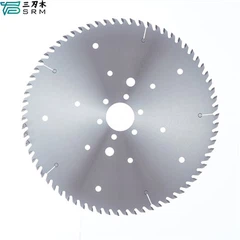
A circular saw blade looks simple, but every part of it is doing a job:
plate (body) - the steel disc that carries the teeth and keeps the blade flat and stable at speed.
carbide tips - the cutting edges, brazed onto the plate. This is what does the actual cutting.
teeth - number, shape and material decide the quality and speed of the cut.
gullets - the spaces between teeth that carry sawdust out of the cut. Too small and the blade clogs; too big and you lose teeth per revolution.
kerf - the width of the cut. A thinner kerf wastes less wood and needs less power; a thicker one is stiffer.
bore and expansion slots - the arbor hole that fits your saw, and the slots that let the blade expand with heat without warping.
Read a blade's spec by the numbers: diameter (the disc size your saw takes), bore (the arbor hole), kerf (cut width), and teeth count. Those four numbers decide whether the blade fits your saw and whether it suits the job.
Tooth Count: The Trade-Off Nobody Explains
Tooth count is the first thing people check, and it's where most mistakes happen. The rule is simple, but it runs against intuition:
fewer teeth (18–24) - aggressive, fast, removes material quickly. Great for ripping and rough cuts. Leaves a rougher edge.
more teeth (40–80) - slower feed but a much smoother finish. Great for crosscutting hardwoods and panel work where the edge matters.
So a framing crew ripping studs wants low tooth count. A shop cutting veneered plywood or doing finish trim wants high tooth count. The same blade can't do both well. When someone asks for "the best wood blade," the honest answer is always "for which cut?"
Tooth Shape: What the Profile Does
The shape of each tooth is designed for how the tooth attacks the wood:
ATB (Alternate Top Bevel) - best for crosscutting, plywood, trim. Alternating bevels shear the wood fibers cleanly; leaves a clean edge, less tear-out.
Flat top (FT / ripping) - best for ripping along the grain. Flat teeth plow material out fast; rougher finish but high feed rate.
TCG (Triple Chip Grind) - best for hardwoods, laminates, abrasive woods. Chipping tooth followed by a flat tooth; tough, resists chipping on dense material.
Combination - best for general shop use, one blade for many jobs. Mixes rip and crosscut teeth; convenient but not the best at either.
For most woodworking, ATB is the safe default for a smooth finish. If you do a lot of ripping, keep a dedicated flat-top blade for it instead of forcing one blade to do everything.
Hook Angle: How Aggressive the Blade Bites
Hook angle is the angle of the tooth face relative to the radius of the blade. It's a spec most buyers never look at, and it changes how the saw feels and behaves:
positive hook (10–30 degrees) - the tooth pulls into the work aggressively. Fast, efficient in wood, but it can grab. Most wood blades are positive hook for a reason.
neutral or negative hook - less grab, safer on non-wood and dado work, but slower feed and more heat.
For circular saw blades for wood, positive hook is normal and correct. The number matters when you switch materials - a blade with the wrong hook angle for a dense engineered board will either grab or burn.
Carbide vs. Steel: Spend Once, or Spend Often
The two material families for wood blades:
HSS (high-speed steel) - cheaper, easier to resharpen, fine for light general work and hobby use. Dulls noticeably faster.
carbide-tipped - more expensive up front, but the carbide tips hold an edge far longer and handle hardwoods, panels and abrasive engineered boards. This is what professionals run, and over the life of the blade it usually costs less per cut.
If you're cutting hardwoods, plywood, MDF or laminates with any regularity, carbide-tipped is the honest choice. The sharpness lasts, and a clean cut on a sheet of finished panel is worth more than the price difference.
Matching the Blade to the Wood
Here's the practical selection table I wish I'd had:
Softwood (SPF, pine) framing - tooth count 24–40, tooth shape FT or ATB. Notes: speed over finish; ripping loves flat-top teeth.
Hardwood (oak, maple, walnut) - tooth count 40–60, tooth shape ATB or TCG. Notes: feed slower, keep the blade sharp, let it cut.
Plywood, veneered panels - tooth count 60–80, tooth shape ATB (fine). Notes: high tooth count stops tear-out on the face veneer.
MDF, particleboard, laminates - tooth count 60–80, tooth shape TCG. Notes: abrasive; carbide-tipped and TCG resist chipping.
Mixed shop use - tooth count 40–50, tooth shape combination. Notes: one blade for everything, great at nothing in particular.
Match the blade to the dominant material on your bench. A shop cutting mostly hardwood and a shop cutting mostly plywood should not be running the same blade.
Common Selection Mistakes
I'd rather tell you what goes wrong, because that's the part nobody warns you about:
buying more teeth than you need - a 60-tooth blade on rough ripping will load up, overheat and dull fast. Match teeth to the cut, not to the biggest number.
ignoring the bore - a blade that doesn't fit your arbor (or needs a reducer ring to fit) can run off-center. Check the bore before you buy.
running a blade too small or too big for the saw - the saw has a rated blade diameter and max RPM. Overspeed a blade and it can fail catastrophically.
using a wood blade on other materials - wood blades are not for metal or masonry. Wrong blade, wrong material, wrong result, real risk.
waiting too long to resharpen - a dull blade burns wood instead of cutting it, and it pushes the saw harder. Sharpening is cheaper than replacing.
What to Send When Ordering Custom Blades
If you're sourcing blades for production - a furniture line, a joinery shop, an OEM spec - a few numbers on your RFQ save everyone time:
diameter, bore, kerf
tooth count and tooth profile (ATB, TCG, FT, combination)
hook angle if the application calls for a specific bite
the material you cut most and the finish you need
the saw type and RPM it runs at
A supplier that asks these questions before quoting is thinking about your cut, not just filling an order.
The Blades We Make
Full disclosure: this is where I work. Feisite (Huizhou Feisite Precision Tools) has been designing and making woodworking tools for 30 years - carbide-tipped circular saw blades for wood, TCT router bits, solid carbide and diamond router bits, CNC spiral cutterheads, edge banding trimmers and more, using international-grade tungsten carbide and supporting samples, OEM and ODM. Every blade is checked before it ships, and 100% on-time delivery is the standard we hold.
But I'm not going to sell you a 60-tooth finish blade if your job is ripping studs. Tell us the material, the cut, the saw and the finish you need, and we'll point you to the blade that actually fits - even when the answer is "you don't need the expensive one."
FAQ
Q1: What is a circular saw blade for wood?
A: A steel disc with cutting teeth - usually carbide-tipped - that spins at high speed to cut wood. The teeth, gullets, kerf and hook angle are all designed for wood fibers, unlike blades for metal or stone.
Q2: How many teeth do I need?
A: Fewer teeth (18–24) for fast ripping and rough cuts, more teeth (40–80) for smooth crosscuts and panel work. Match teeth to the cut, not to the biggest number on the box.
Q3: What's the difference between carbide-tipped and steel blades?
A: Carbide-tipped blades cost more but hold an edge far longer and cut hardwoods, plywood and laminates cleanly. HSS steel blades are cheaper and fine for light work, but dull faster. Professionals run carbide.
Q4: Why does my blade burn the wood?
A: Usually a dull blade, too many teeth for a fast rip, too slow a feed rate, or the wrong hook angle for the material. Fix the blade first, then the technique.
Q5: Can one blade do everything?
A: A combination blade will get by, but it's the best at nothing. If you cut both rough framing and finished panels regularly, two dedicated blades pay for themselves.
Q6: How often should I resharpen a saw blade?
A: When the cut starts burning, the edges get rough, or the saw has to push harder than before. Sharpening is cheaper than replacement, and it protects the saw.
The Honest Version
The short version: a circular saw blade for wood is chosen by the cut, the material and the saw - in that order. Match tooth count and tooth shape to what you actually cut, spend the money on carbide where the finish or the volume demands it, and check the bore and RPM before you ever mount it. Get those right and the blade does the work. Get them wrong and you'll be explaining why a new blade cut worse than the old one.
Circular Saw Blades For Wood: The Selection Guide I Wish I Had Before My First Pro Cut
Popular Products

Compression Bit With Chip Breaker
Compression Router Bit with Chip Breaker for Melamine coverd with Particle board

2 Flute Compression Router Bit
Compression Router Bit especially design for Melamine Board

62xH50x35 Carbide Inserts Spiral Cutter Head
Carbide Indexable Inserts Spiral Cutter Head Four Sided Spiral Cutter Shaft Woodworking Tool Helical Cutter Blade

D80xd20xH50 PCD CNC Edge Cutter Tools
Factory Price D80xd20xH20 Six Teeth CNC Edge Cutter Tools For Wood,Edge Banding Cutter Rough Trimming Cutter for KDT

68x16xH16 6T R2.5 PCD Fine Trimming Cutter For Edge Bander
High Wear Resistance 6 Flute Edge Banding Machine Alloy Steel Finishing Widely Utilized In Woodworking Trimming

D125*30*H35 Diamond Pre Milling Cutter
Woodworking Machinery Parts Tools D125*30*H35 Diamond PCD Pre Milling Spiral Edge Banding Cutter for SCM KDT HOMAG

Diamond Premilling Cutter 100x30x65 15T For HOMAG
Diamond premilling cutter HD 100x30x65 15T for HOMAG BRANDT edge banding machines.

SCM Profile Trimming Cutters
SCM 07L0027662B 07L0027669G TCT Carbide Profile Trimming Cutters• SCM TCT edge banding cutter• 07L0027662B SCM trimming
SCM Spare Parts
Diamond Jointing Cutter 07L0115304L 07L0150829G 80X56X30 Z2+2 for SCM Edge Banding 07L0115304L• 07L0150829G• 80X56X30•

Corner Round Shaper Cutters
959 Carbide Tipped 3-Wing Corner Round 3/4 Radius x 3-5/8 Dia x 1 x 1/2 & 3/4 Bore

Carbide Half Round Shaper Cutter Head
Half Round Shaper Cutters with Carbide Tipped 4-Wing, Customizable Radius from 1/8 to 1 inch with Bore 3/4 1 1-1/4

Disposable Pre-milling Cutter
Disposable pre-milling cutter for edgebanding machine

Radius Profile Insert Carbide
Radius Profile Carbide insert knifes These radius profile carbide insert blades all made of tunsten carbide materials,

Rectangle Carabide Reversible Insert Knives
How to choose a high-performance, cost-effective Carbide Insert blade? We adopt disposable cutter shafts originally to

Nesting Up/down PCD Router Bit 2+2
Designed for CNC nesting and panel processing, this 2+2 PCD compression spiral router bit helps achieve cleaner top and
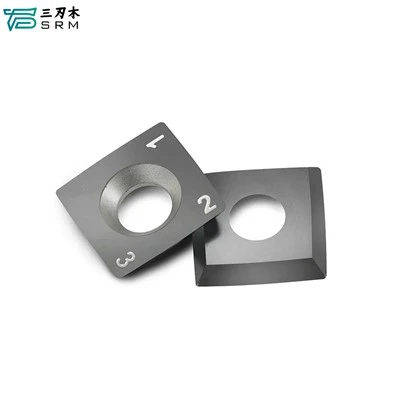
Carbide Insert Knife 15x15x2.5mm-30°-R150-4R0.5 For Helical Cutterhead
What Are Carbide Tool Inserts?Carbide cutting tools are precision machining tools mainly made of tungsten carbide.