





V groove router bit angles sit at the top of our weekly email pile. We make woodworking tools in Guangdong, and a typical day brings a buyer who ordered a 90 degree v groove router bit for small sign letters, cut one board, and wrote back asking why the letters look muddy. Another customer takes 120 degrees for a cabinet panel and finds the groove so wide the board feels hollow. Both bought a fine bit. They bought the wrong angle.
The angle is the shape of the cut, and the shape follows simple geometry. Plunge a 60 degree v groove router bit 5 mm into a board and the groove opens a little wider than 5 mm at the top. Do the same with 90 degrees and it opens 10 mm. At 120 degrees the same plunge spreads to roughly 17 mm. One tool, three widths from one depth, and that is why the angle question never goes away. There is no universal best angle, only the angle that fits the letter size in front of you.
Sixty degrees is the fine-line end of the v groove router bit range. A 30 mm letter cut at 60 degrees keeps a thin, readable stroke because the groove stays narrow next to the letter. Cut that same letter with a 90 degree bit and the groove eats into the stroke, the letter reads heavy and blurs at a distance. A sign shop outside Melbourne keeps a 60 degree v groove router bit loaded in every machine they own, mostly for small business signage where the name has to fit a small fascia. When your letters run smaller than a couple of inches, 60 degrees is the place to start.
Ninety degrees is where most v groove router bit orders start, and it is a safe default for medium work. The cut gives clean 45 degree walls, wide enough to read at normal sign distances and narrow enough to stay crisp in panels. A 3 mm plunge at 90 degrees opens a 6 mm groove, which suits letters from about two inches up, drawer fronts, and cabinet door inserts. When a customer writes in with no drawing and no sample, we quote the 90 degree v groove router bit and adjust after the first test board.
The 120 degree v groove router bit belongs on panels and wide decorative lines, not on small letters. At the same 3 mm plunge it opens a groove around 10 mm wide, which is why it suits beadboard-style inserts and soft grooves in thin plywood. It removes less material for the same visible width, so the board keeps more strength. The people who regret 120 degrees are almost always the ones who tried to engrave small lettering with it and got a groove wider than the letter itself.
Depth and feed decide half the result, and this is where most of the complaints come from. Try to cut a deep V in one pass on a handheld router and the bit burns, the edge chips, or the router wanders off the line. We tell customers to take deep grooves in two passes, one rough cut around two thirds of the depth, then a light final pass at full depth with a slower feed. Every v groove router bit we ship is tested on a scrap board before it leaves the shop, and nine times out of ten a ragged letter comes from feed speed, not from the angle or the edge.
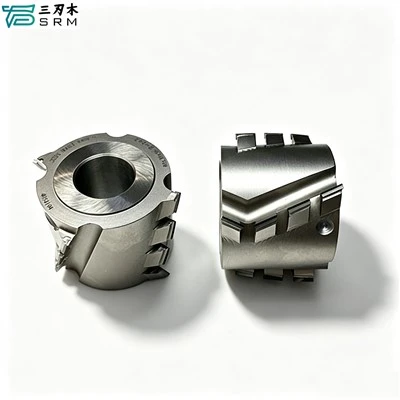
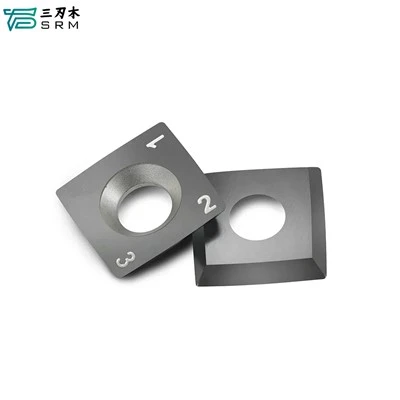
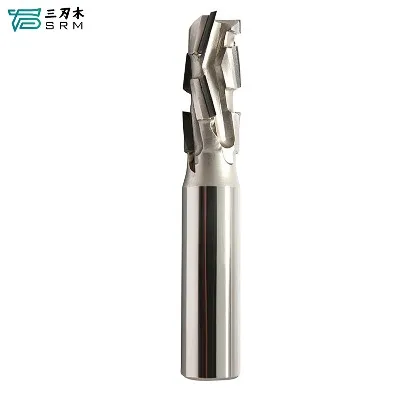
The body and flute choice come after the angle, not before. Carbide-tipped bits braze the cutting edge onto a steel body, which keeps cost down and handles plywood, MDF, and softwoods well. Solid carbide bits cost more but hold up on abrasive sheets and long production runs. For flutes, a single-flute v groove router bit throws chips better in acrylic and plastic, while two-flute bits leave a smoother wall in wood. If you want to compare the two families, our cnc v bits and insert v groove router bit pages list them side by side with specs.
Before you order a v groove router bit, run a short check and you will cut most returns out of the equation. Measure the smallest letter or groove, under two inches means 60, medium lettering and panels mean 90, wide shallow grooves mean 120. Write down the material, softwood and plywood take carbide-tipped, abrasive sheets take solid carbide. Note the machine, CNC work and plastics favor single flute, hand routing in wood favors two flute. Two minutes of measuring beats a week of waiting for a replacement shipment.
We still get the emails from buyers who engraved small letters with a 120 degree bit and blamed the tool, but the tool was not the problem. Match the angle to the letter, take deep grooves in two passes, and a mid-range v groove router bit from any serious factory will outlast the job. Send us the letter size and the material if you are not sure, we will reply with the angle and a quote. Start at https://www.feisitool.com/