









In the realm of streaming services, compression bits play a pivotal role in ensuring efficient data transfer and high - quality viewing experiences. As a provider of compression bits, I am well - versed in how these tiny yet powerful elements function within the complex ecosystem of streaming.
Understanding Compression in Streaming
Streaming services deal with vast amounts of data. Whether it's high - definition videos, live sports events, or music concerts, the sheer volume of information that needs to be transmitted from servers to end - user devices is staggering. Without proper compression, this data would take an inordinate amount of time to transfer, and the bandwidth requirements would be astronomical.
Compression, in simple terms, is the process of reducing the size of data files without significantly degrading the quality. Compression bits are the fundamental units that make this process possible. They are used to represent the data in a more compact form. There are two main types of compression: lossy and lossless.
Lossy Compression
Lossy compression is the most commonly used method in streaming services. It works by removing some of the data that is considered less important or less noticeable to the human eye or ear. For example, in video compression, certain high - frequency details that are not easily perceived by the viewer may be discarded. In audio compression, some of the less audible frequencies can be removed.
The compression bits in lossy compression are used to code the remaining data in an efficient way. The encoder analyzes the content and decides which parts of the data can be removed. Then, it uses a set of algorithms to represent the remaining data using fewer bits. For instance, the Moving Picture Experts Group (MPEG) standards, such as MPEG - 2 and MPEG - 4, use lossy compression techniques. These standards define how the compression bits should be arranged and processed to achieve optimal compression ratios.
When a user requests a video stream, the server sends the compressed data to the user's device. The device then uses a decoder to reverse the compression process and reconstruct the video or audio. The decoder reads the compression bits and uses the same algorithms that were used during encoding to recreate the content as closely as possible to the original.
Lossless Compression
Lossless compression, on the other hand, ensures that the original data can be perfectly reconstructed from the compressed data. This is achieved by finding patterns in the data and representing them more efficiently. For example, if a particular sequence of pixels in an image repeats multiple times, the compression algorithm can represent this sequence with a shorter code.
In streaming services, lossless compression is less commonly used for video and audio due to its relatively low compression ratios. However, it is still important for certain types of data, such as text or metadata. The compression bits in lossless compression are used to represent these patterns and codes. The encoder identifies the patterns in the data and assigns unique codes to them. The decoder then uses these codes to reconstruct the original data exactly.
The Role of Compression Bits in Bandwidth Management
One of the key challenges in streaming services is managing bandwidth effectively. Bandwidth is the amount of data that can be transmitted over a network in a given time. With the increasing popularity of high - definition and 4K streaming, the demand for bandwidth has skyrocketed.
Compression bits are essential for optimizing bandwidth usage. By reducing the size of the data files, less bandwidth is required to transmit the same content. This means that more users can stream content simultaneously without experiencing buffering or slowdowns.
For example, a high - definition video without compression may require several megabits per second of bandwidth to stream smoothly. However, with efficient compression, the same video can be streamed with a fraction of that bandwidth. The compression bits are carefully crafted to balance between reducing the file size and maintaining an acceptable level of quality.
Streaming platforms also use adaptive bitrate streaming to further optimize bandwidth usage. Adaptive bitrate streaming adjusts the quality of the stream in real - time based on the user's network conditions. When the network is fast, the platform can send a higher - quality stream with more compression bits, providing a better viewing experience. When the network is slow, the platform can switch to a lower - quality stream with fewer compression bits to prevent buffering.
The Technicalities of Compression Bit Processing
The processing of compression bits involves several stages, from encoding at the server to decoding at the user's device.
Encoding
At the server side, the encoding process begins with the analysis of the raw data. The encoder examines the characteristics of the video or audio, such as the color distribution, motion patterns, and frequency components. Based on this analysis, it selects the appropriate compression algorithm and parameters.
The encoder then divides the data into smaller blocks and processes each block separately. For each block, it determines the best way to represent the data using compression bits. This may involve quantizing the data, which means reducing the number of possible values that a particular data point can take. For example, in video encoding, the color values of pixels may be quantized to a smaller range of values.
After quantization, the encoder applies entropy coding to further reduce the size of the data. Entropy coding assigns shorter codes to more frequently occurring data patterns and longer codes to less frequent patterns. This results in a more efficient representation of the data using compression bits.
Decoding
At the user's device, the decoder receives the compressed data and starts the decoding process. The decoder first reads the compression bits and uses the same algorithms that were used during encoding to reverse the entropy coding and quantization steps.


It reconstructs the original data block by block and combines them to form the complete video or audio stream. The decoder also needs to account for any errors that may have occurred during transmission. Error correction codes, which are also part of the compression bit stream, are used to detect and correct these errors.
Our Compression Bit Solutions
As a compression bit provider, we offer a wide range of solutions tailored to the specific needs of streaming services. Our compression bits are designed to provide high - quality compression with minimal loss of data.
We understand the importance of efficient bandwidth management in streaming. Our products are optimized to achieve the best compression ratios possible, allowing streaming platforms to deliver high - quality content to their users without overloading the network.
We also offer solutions for both lossy and lossless compression. Whether you need to compress video, audio, or metadata, we have the right compression bits for you. Our team of experts is constantly researching and developing new algorithms and techniques to improve the performance of our compression bits.
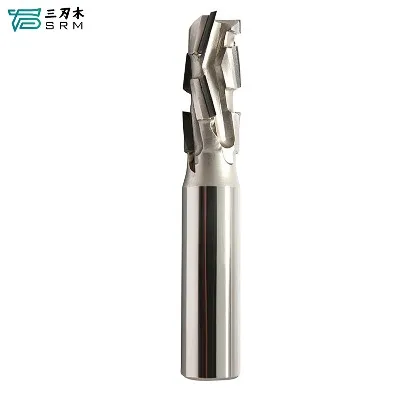
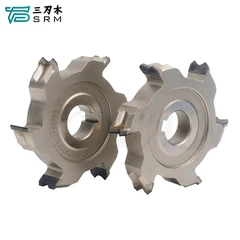
If you are interested in Lock Hole Router Bit, Milling Bit for Neon Strip, or Roughing End Mill Cutter, we can also provide relevant information and support.
Contact Us for Procurement
If you are a streaming service provider or are involved in the streaming industry and are looking for reliable compression bit solutions, we invite you to contact us for procurement discussions. Our team is ready to work with you to understand your specific requirements and provide the best - fitting compression bit products.
References
- Salomon, David. "Data Compression: The Complete Reference." Springer, 2004.
- Wiegand, Thomas, et al. "Overview of the H.264/AVC Video Coding Standard." IEEE Transactions on Circuits and Systems for Video Technology, vol. 13, no. 7, 2003, pp. 560 - 576.
- Sullivan, Gary J., et al. "Overview of the High Efficiency Video Coding (HEVC) Standard." Proceedings of the IEEE, vol. 102, no. 12, 2014, pp. 1649 - 1668.


