







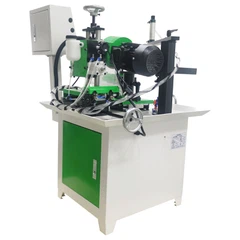

As a supplier of frame saw blades, I've witnessed firsthand the crucial role that feed rate plays in the cutting performance of these essential tools. In this blog, I'll delve into the intricate relationship between feed rate and the cutting performance of frame saw blades, exploring how different feed rates can impact various aspects of the cutting process.
Understanding Feed Rate
Feed rate refers to the speed at which the workpiece is fed into the saw blade during the cutting process. It is typically measured in inches per minute (IPM) or millimeters per minute (mm/min). The feed rate can have a significant impact on the cutting performance of a frame saw blade, affecting factors such as cutting quality, blade life, and productivity.
Impact on Cutting Quality
One of the most noticeable effects of feed rate on cutting performance is its impact on cutting quality. A proper feed rate ensures that the saw blade cuts through the workpiece smoothly and cleanly, resulting in a high-quality cut with minimal tear-out, splintering, or rough edges.
When the feed rate is too slow, the saw blade may overheat and cause the wood to burn or char, resulting in a poor-quality cut. On the other hand, if the feed rate is too fast, the saw blade may not have enough time to cut through the workpiece properly, leading to tear-out, splintering, and rough edges.
Impact on Blade Life
Feed rate also plays a crucial role in determining the lifespan of a frame saw blade. A proper feed rate helps to ensure that the saw blade is not overstressed, which can lead to premature wear and tear.
When the feed rate is too slow, the saw blade may rub against the workpiece for an extended period, causing excessive heat and friction. This can lead to dulling of the blade teeth and a decrease in cutting performance. Conversely, if the feed rate is too fast, the saw blade may be subjected to excessive force, which can cause the teeth to break or chip.
Impact on Productivity
In addition to cutting quality and blade life, feed rate also has a significant impact on productivity. A proper feed rate allows the saw blade to cut through the workpiece quickly and efficiently, reducing the time and effort required to complete the cutting process.
When the feed rate is too slow, the cutting process can become time-consuming and inefficient, resulting in lower productivity. On the other hand, if the feed rate is too fast, the saw blade may not be able to keep up with the feed, leading to a decrease in cutting quality and an increase in the risk of blade damage.
Finding the Optimal Feed Rate
Finding the optimal feed rate for a frame saw blade depends on several factors, including the type of material being cut, the thickness of the workpiece, the type of saw blade being used, and the power of the saw.


As a general rule, it is recommended to start with a slow feed rate and gradually increase it until the desired cutting quality and productivity are achieved. It is also important to monitor the saw blade during the cutting process to ensure that it is not overheating or experiencing excessive wear.
Conclusion
In conclusion, the feed rate plays a crucial role in the cutting performance of a frame saw blade. A proper feed rate ensures that the saw blade cuts through the workpiece smoothly and cleanly, resulting in a high-quality cut with minimal tear-out, splintering, or rough edges. It also helps to extend the lifespan of the saw blade and improve productivity.
As a supplier of frame saw blades, we understand the importance of finding the optimal feed rate for your specific cutting needs. We offer a wide range of high-quality saw blades, including Saw Blade for Sliding Table Machine, Scoring Saw Blade, and Edge Banding Saw Blade, to meet the diverse needs of our customers.
If you're looking for a reliable supplier of frame saw blades, we invite you to contact us to discuss your specific requirements. Our team of experts is available to provide you with personalized advice and support to help you find the right saw blade for your application.


