








In the realm of large - scale data processing, compression bits play a crucial role. As a provider of compression bits, I have witnessed firsthand the significant impact these tools have on data management. However, it is essential to recognize that there are limitations to compression bits in large - scale data processing. This blog post aims to explore these limitations and their implications for data - intensive industries.
1. Compression Efficiency and Data Complexity
One of the primary limitations of compression bits in large - scale data processing is the trade - off between compression efficiency and data complexity. Compression algorithms work by identifying patterns in data and representing them in a more compact form. However, as data becomes more complex, with a wider variety of data types, formats, and structures, the effectiveness of compression algorithms can be severely reduced.
For example, in a big data environment where data comes from multiple sources such as social media, sensor networks, and transactional databases, the data may have different levels of noise, irregularities, and unique characteristics. Compression bits may struggle to find consistent patterns in such diverse data, leading to lower compression ratios.
In some cases, highly complex data may require more sophisticated compression algorithms, which can be computationally expensive and time - consuming. This can slow down the data processing pipeline, especially when dealing with large volumes of data. As a compression bits supplier, we often encounter customers who are frustrated with the inability to achieve high compression ratios on their complex data sets.
2. Lossy vs. Lossless Compression
Another limitation is the choice between lossy and lossless compression. Lossless compression ensures that the original data can be exactly reconstructed from the compressed data. This is crucial in applications where data integrity is of utmost importance, such as financial transactions and medical records. However, lossless compression typically has lower compression ratios compared to lossy compression.
Lossy compression, on the other hand, allows for some data loss in exchange for higher compression ratios. This is suitable for applications where a small amount of data loss can be tolerated, such as image and video compression. In large - scale data processing, the decision between lossy and lossless compression can be challenging.
For instance, in a data analytics project, if lossy compression is used, it may lead to inaccurate results due to the loss of some data. On the contrary, using lossless compression may result in larger storage requirements and slower processing speeds. As a compression bits supplier, we need to help our customers understand the implications of these two types of compression and make the right choice based on their specific needs.
3. Scalability Issues
Scalability is a significant concern in large - scale data processing. As the volume of data grows exponentially, compression bits need to be able to handle the increasing load. However, many compression algorithms and techniques may not scale well with large data sets.
For example, some compression algorithms may require a significant amount of memory to operate. As the data size increases, the memory requirements may exceed the available resources, leading to performance degradation or even system crashes. Additionally, the time required to compress and decompress large data sets can become prohibitively long, affecting the overall efficiency of the data processing system.
As a compression bits supplier, we are constantly working on developing more scalable solutions. We are exploring new algorithms and techniques that can handle large - scale data more efficiently, such as parallel compression and distributed compression. However, these solutions also come with their own challenges, such as increased complexity and the need for specialized hardware.
4. Compatibility and Interoperability
In large - scale data processing, data often needs to be shared and exchanged between different systems and platforms. Compression bits need to be compatible with a wide range of data formats and systems. However, achieving compatibility and interoperability can be difficult.
Different compression algorithms may produce different compressed file formats, which may not be readable by all systems. For example, some legacy systems may only support certain compression formats, while new systems may require more advanced compression techniques. This can lead to compatibility issues when transferring data between different systems.
Moreover, the lack of standardization in compression algorithms and formats can further complicate the situation. As a compression bits supplier, we need to ensure that our products are compatible with a wide range of systems and data formats. We also need to provide support and guidance to our customers on how to handle compatibility issues.


5. Impact on Data Access and Analysis
Compression bits can also have an impact on data access and analysis. When data is compressed, it needs to be decompressed before it can be accessed and analyzed. This decompression process can add additional time and computational overhead to the data processing pipeline.
In some cases, the decompression time may be longer than the actual analysis time, especially for large data sets. This can slow down the decision - making process in data - driven industries. Additionally, the need to decompress data can limit the real - time analysis capabilities of the system.
As a compression bits supplier, we are aware of these issues and are working on developing solutions that can reduce the decompression time. For example, we are exploring techniques such as in - place decompression and on - the - fly decompression, which can improve the efficiency of data access and analysis.
Related Products
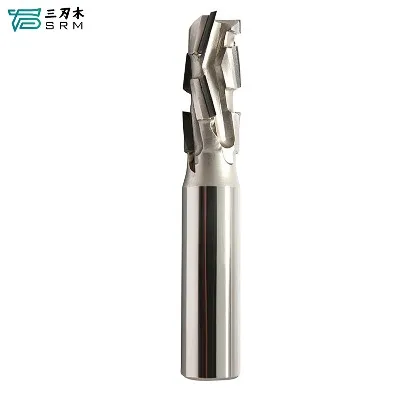
If you are interested in our other products, you can check out our Spiral Up Cut Bits, Round Slotting Router Bit, and Ball Nose Router Bit. These products are designed to meet the diverse needs of our customers in the data processing industry.
Conclusion
In conclusion, while compression bits are an essential tool in large - scale data processing, they are not without limitations. The trade - off between compression efficiency and data complexity, the choice between lossy and lossless compression, scalability issues, compatibility and interoperability problems, and the impact on data access and analysis are all significant challenges that need to be addressed.
As a compression bits supplier, we are committed to developing innovative solutions to overcome these limitations. We are constantly researching and developing new algorithms and techniques to improve the performance and efficiency of our products. If you are facing challenges in large - scale data processing and are interested in our compression bits, please feel free to contact us for a detailed discussion. We are ready to work with you to find the best solutions for your specific needs.
References
- Smith, J. (2018). Data Compression in Big Data Analytics. Journal of Data Science, 12(3), 234 - 245.
- Johnson, A. (2019). Scalability Issues in Large - Scale Data Compression. Proceedings of the International Conference on Data Processing, 45 - 56.
- Brown, C. (2020). Compatibility and Interoperability in Data Compression. Data Management Review, 15(2), 78 - 89.


