



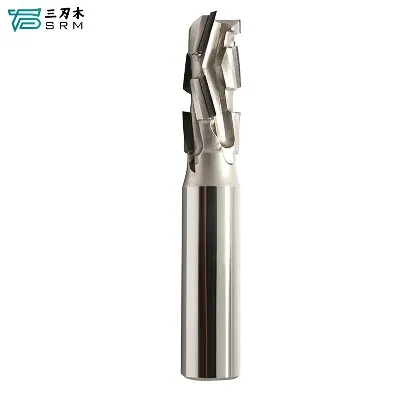





Hey there! As a supplier of Step Router Bits, I'm super stoked to talk about the flute design of these nifty tools. Flute design might not sound like the most exciting topic at first, but trust me, it plays a huge role in how well a Step Router Bit performs.
So, what exactly are the flutes of a Step Router Bit? Well, the flutes are those spiral grooves that run along the length of the bit. They're not just there for looks; they serve some really important functions.
First off, the flutes are responsible for chip evacuation. When you're using a Step Router Bit to cut through materials like wood, plastic, or composite, it generates chips. If these chips aren't removed properly, they can clog up the bit, causing it to overheat and reducing the quality of the cut. The spiral shape of the flutes helps to carry the chips away from the cutting edge and out of the workpiece. This keeps the bit cool and ensures a smooth, clean cut.


The number of flutes on a Step Router Bit can vary, and this has a big impact on its performance. Generally speaking, bits with more flutes are better suited for making fine, smooth cuts. They provide a higher number of cutting edges per revolution, which means they can remove material more evenly and with less tear-out. However, more flutes also means less space between them, which can make chip evacuation a bit more challenging. So, if you're working with a material that produces large chips, you might want to go for a bit with fewer flutes.
On the other hand, bits with fewer flutes are great for roughing cuts and working with materials that generate a lot of chips. The larger space between the flutes allows for better chip removal, preventing the bit from getting clogged. But because they have fewer cutting edges, the finish might not be as smooth as with a multi-flute bit.
Another important aspect of flute design is the helix angle. The helix angle refers to the angle at which the flutes are spiraled around the bit. A higher helix angle means the flutes are more steeply spiraled. This can improve chip evacuation, especially when working with softer materials, as the chips are more easily thrown out of the cut. However, a high helix angle can also make the bit more prone to vibration, which might affect the quality of the cut. A lower helix angle, on the other hand, provides more stability but might not be as effective at removing chips.
Now, let's talk about some of the different types of Step Router Bits and how their flute designs are optimized for specific applications.
For instance, Compression Router Bit has a unique flute design that combines both up-cut and down-cut flutes. This design allows the bit to push chips both up and down simultaneously, which is great for materials like laminates and veneers. It helps to prevent chip-out on both the top and bottom surfaces of the workpiece, resulting in a clean, professional finish.
Then there's the TCT Tapered Ball Nose Bit. These bits are often used for contouring and 3D carving. Their flute design is optimized to provide smooth, continuous cuts along curved surfaces. The tapered shape of the bit, combined with the right number and angle of the flutes, allows for precise control and a high-quality finish.
And let's not forget about the Spiral Cut Router Bit. As the name suggests, these bits have a spiral flute design that is specifically engineered to lift chips up and out of the cut. They're great for roughing cuts and removing large amounts of material quickly. The spiral design also helps to reduce the amount of friction, which can lead to longer bit life and better performance.
So, why does all of this matter to you? Well, if you're in the market for Step Router Bits, understanding the flute design can help you choose the right bit for your specific application. Whether you're a professional woodworker, a DIY enthusiast, or someone in an industrial setting, having the right tool can make a world of difference in the quality of your work.
If you're looking for high-quality Step Router Bits with optimized flute designs, you've come to the right place. We offer a wide range of router bits, each carefully crafted to meet the needs of different users and applications. Our bits are made from the highest quality materials and are designed to provide long-lasting performance and a superior finish.
If you have any questions or are interested in placing an order, don't hesitate to reach out. We're here to help you find the perfect Step Router Bit for your project. Whether you need advice on which bit to choose or have specific requirements for your application, our team of experts is ready to assist you.
In conclusion, the flute design of a Step Router Bit is a crucial factor that can greatly impact its performance. By understanding the different aspects of flute design, such as the number of flutes, helix angle, and how they're optimized for specific applications, you can make an informed decision when choosing a router bit. So, if you're in the market for Step Router Bits, give us a chance to show you what we've got. We're confident that you'll be impressed with the quality and performance of our products.
References
- Woodworking Machinery and Tools Handbook
- Router Bit Technology and Applications Guide


