


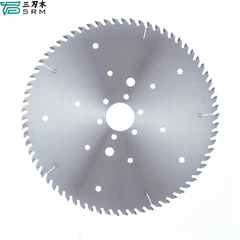


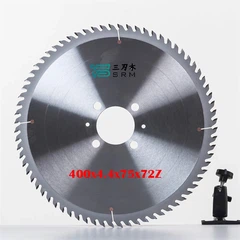

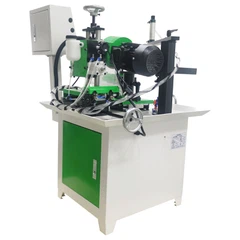
A kitchen cabinet factory in Ningbo sent me photos last month. Melamine board with HPL edging, 0.8 mm laminate, and the edges chipped on every fourth panel. They were running a standard carbide pre-milling cutter at 18,000 rpm. The chips appeared on the laminate face, never on the board. They blamed the glue. The glue was fine.
HPL is a hard, brittle resin surface over a soft core. Any cutter that lifts or levers that face will crack it. Ordering blind hpl cutters is how rework budgets double. That is why the standard hpl cutter question is never "how sharp" but "what geometry, what material, and what direction." This guide is about the hpl cutter specs that actually prevent chipping: PCD versus carbide, rake angle, flute direction, and how to set the cut on an edge banding machine.
Why HPL Is Hard on a Cutter
HPL stands for high-pressure laminate. Layers of kraft paper soaked in resin, pressed under heat, then glued onto particleboard or MDF. The top face is hard and brittle. The core is soft.
Cutting HPL is a two-material problem. Carbide cuts the core easily and dulls on the face. Diamond cuts the face cleanly and shrugs off the abrasion. If the face chips, the board goes to rework. If the cutter dulls, the chip follows within a few hundred meters of edge. The resin face is what resists scratches and moisture. The same face is what cracks under a wrong cut.
Carbide vs PCD: What Changes on HPL
Carbide hpl cutters are cheaper per piece and fine for low volume. On a busy edge banding line, a carbide tipped tool starts chipping the laminate face after a few thousand linear meters.
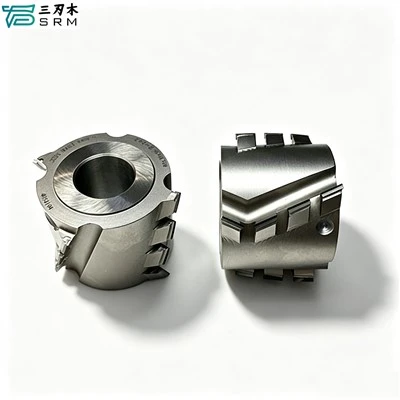
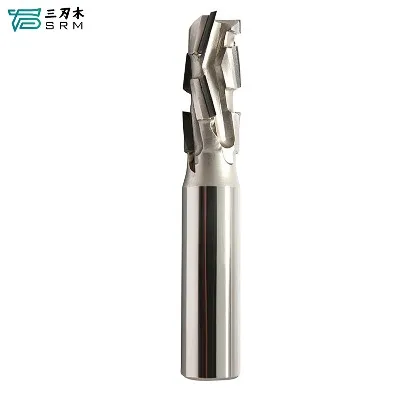
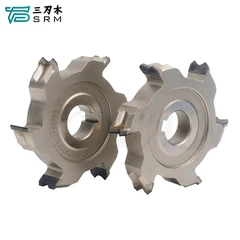
PCD hpl cutters use polycrystalline diamond inserts brazed onto a carbide body. They cost more upfront, often two to four times more. On HPL and other resin-rich panels, they outlast carbide ten to twenty times, and the edge stays clean the whole run. Shops running 600 panels a day usually switch to PCD after the first carbide reorder. For a single edge banding line, one PCD hpl cutter often pays for itself inside the first month.
The cheap hpl cutter is not the cheap one. The one that keeps the line running is.
The Geometry That Stops Chipping
Chip control on HPL comes from the rake angle and the cutting direction, not from the coating.
Positive rake, roughly 5 to 8 degrees, shears the laminate instead of pushing it off the board. A neutral or negative rake acts like a scraper and cracks the face. Ask the supplier for the rake angle on the drawing, not just the diameter.
The cutting direction matters more on an edge banding machine. The cutter should push the laminate face against the board, not lift it. Down-cut geometry presses the top surface in. Up-cut geometry lifts it. On double-sided HPL, a compression hpl cutter is the standard fix.
Also check the number of flutes. Two flute cutters clear chips well but leave a rougher edge. Three or four flute cutters give a finer finish and a steadier load, at the cost of chip space.
How to Spec an HPL Cutter for Edge Banding
When you order an hpl cutter, write the spec down in numbers.
Cutting diameter. Match it to the thickness of the laminate plus the glue line. Oversized cutters chatter on thin strips.
Shank diameter. 8 mm, 1/2 inch, 3/4 inch. Match the spindle collet, not the router you happen to own.
Overall length and cutting length. The cutting length must cover the laminate and the board edge without the shank rubbing.
Rake and clearance angles. Positive rake, enough clearance to shed resin. Resin buildup is what turns a clean hpl cutter into a burning one.
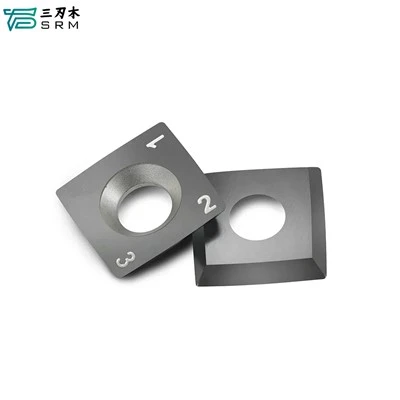
PCD or carbide tipped, and how many inserts. Insert style cutters let you rotate or replace the cutting edges instead of buying a new tool.
Send the laminate thickness, the board thickness, and the machine model. The factory should reply with the rake angle, the flute count, and a recommended feed rate, before you pay. That number is the difference between a clean hpl cutter run and a burn mark.
Running an HPL Cutter Without Tears
Set the cut so the tool engages the laminate face first, then the board edge. Let the cutter enter at full depth instead of shallow passes, because shallow passes let the brittle face flex.
Keep the feed rate steady. A slow, hesitant feed heats the resin and melts the edge. A steady feed at the recommended chip load keeps it cool.
And check the dust extraction. HPL dust is abrasive and resin-rich. Good extraction keeps the chip load visible and the cutter temperature down.
FAQ
What is an hpl cutter? A router or milling cutter designed for high-pressure laminate, with geometry and edge material that stop chipping on the resin face.
Carbide or PCD for HPL? Carbide for low volume and short runs. PCD for production lines and panels with resin-rich faces, where tool life and edge quality pay for the price difference.
Why does my hpl cutter chip the edge? Usually the rake angle is wrong, the direction lifts the face, or the cutter is dull from resin build-up.
Can I use a normal router bit for HPL? It will cut, but expect chips on the face and short tool life. A proper hpl cutter is the difference between rework and a clean edge.
How long does a PCD hpl cutter last? On clean HPL, commonly ten to twenty times a carbide cutter, depending on feed rate and dust control.
Send Us Your Panel Spec
An hpl cutter only makes sense against your panel.
Tell us the laminate, the board thickness, the edge banding machine, and the volume. Our engineers will recommend the PCD or carbide tipped option, the rake angle, and the flute count, before you order. See our edge banding cutters range, check the diamond router bits for laminate work, and look through the carbide tipped straight router bits for the rest of the shop. Or send the drawing through the contact page. We will reply with numbers you can compare.