





A cabinet shop near Huizhou called me about their straight-knife planer last fall. The finish was rough, the noise was brutal, and they were buying new knives every three weeks. They'd heard a spiral planer cutterhead would fix all three. So they ordered one, bolted it on, and phoned back a month later. The finish was better. The noise was gone. Then the inserts chipped on a knotty oak board. Nobody told them carbide is hard and brittle at the same time. What they should have checked is exactly what this guide covers. Honest answer: three specs and one supplier.
Why Upgrading to a Spiral Planer Costs More Upfront
A spiral planer cutterhead costs more than a straight knife head at the counter. The body is alloy steel, the blades are TCT carbide, and the machining that holds every insert in a shear angle is not cheap. But the price tag is the wrong number to stare at.
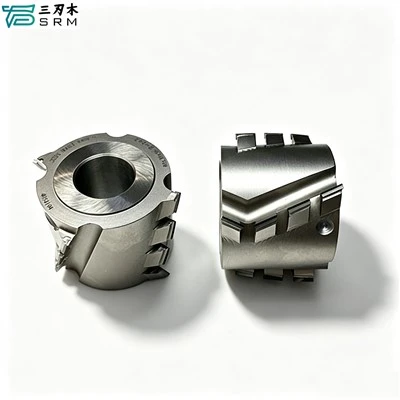
Spiral cutterheads cut with dozens of small, shear-angled inserts instead of one long straight knife. Each insert takes a smaller chip, so the machine pulls less power and the finish comes out tear-out free. When an edge dulls, you rotate the insert and keep cutting. One insert carries up to four cutting edges. That's four separate blades sitting in one piece of carbide.
Over a season, the spiral planer upgrade usually pays for itself. The blades last longer, the downtime for sharpening disappears, and the reject rate drops.
Straight Knife vs Spiral Cutterhead: What Actually Changes
A straight knife cutterhead has one long blade that chops the wood in a wide, violent pass. It works. It's loud. It tears figured grain, and the blade dulls along its whole length at once.
A spiral planer cutterhead replaces that with a staggered row of small inserts arranged in a helical path. Each insert shears a narrow sliver of wood. The cut is gentler, the air compression drops, and the impact forces that make noise mostly vanish. I've watched shops swap heads and cut the same oak. One pass tells the story.
| Straight Knife Cutterhead | Spiral Planer Cutterhead | |
|---|---|---|
| Blade design | One long straight knife | Dozens of small shear-angled inserts |
| Cutting action | Chopping | Shearing |
| Surface finish | Tear-out on figured grain | Smooth, tear-out free |
| Noise level | High | Quiet |
| Sharpening | Full blade re-sharpen | Rotate insert to a fresh edge |
| Cost over time | Frequent knife replacement | Longer life, lower reject rate |
Most shops move to a spiral planer for the finish first. They stay for the noise reduction and the knife budget.
Insert Specs That Matter: Size, Angle, and Cutting Edges
Not all inserts are the same. The spec sheet decides.
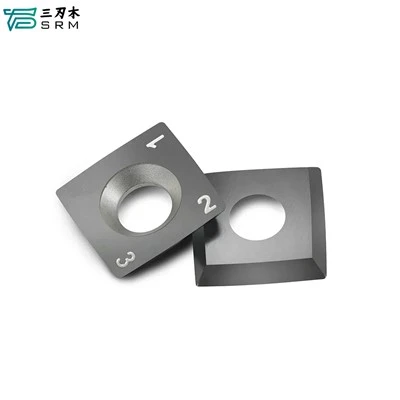
A common carbide insert knife for a spiral planer is 15 x 15 x 2.5 mm with a 30° cutting angle and a radius around R100, coded something like 4R0.5. Tungsten carbide inserts run over 90 HRA hardness, which is far beyond high-speed steel. That hardness is why they hold an edge so long. It's also why they chip on knots and stray metal. Carbide is a trade, not a free lunch.
Each insert gives you four cutting edges. When edge one dulls, you loosen the screw, rotate the insert, and tighten it back down. No sharpening rig, no wheel, no sending blades out. That's the whole maintenance routine.
If you already run a Byrd Shelix-style head, the same 15 x 15 x 2.5 mm insert fits many helical cutterheads too. Check the exact size and angle against your head before ordering.
Sizing a Spiral Planer Cutterhead to Your Machine
The cutterhead has to match the machine, not the other way around. Measure the bore, height, and outer diameter your planer, thicknesser, or double surfacer accepts.
Typical spiral planer cutterhead sizes start at 62 mm and 90 mm with a 35 mm bore, then 100 mm and 125 mm with 40 mm. Heights run from H50 up to H230 depending on the width of stock you surface. A common configuration is 6 grooves, meaning six inserts around the circle.
| OD (mm) | Inner Dia (mm) | Height (mm) | Grooves |
|---|---|---|---|
| 62 | 35 | H50–H150 | 6T |
| 90 | 35 | H50–H150 | 6T |
| 100 | 40 | H50–H150 | 6T |
| 125 | 40 | H50–H230 | 6T |
MDF, solid board, calcium silicate board, wood core board, and plywood all cut clean with these heads on a thicknesser, planer, double surfacer, or sander. Send your machine model and stock width. They confirm the bore and height before you order.
Noise, Finish, and Feed: What You'll Notice in the Shop
Sound hits you first. A spiral planer cutterhead runs dramatically quieter because the helical path and small segmented cutters minimize air compression and impact forces. If noise matters in your shop, a spiral planer is the single biggest upgrade available. Walk past a straight-knife planer and you'll hear it two rooms away.
Then look at the surface. Fewer chips and less dust, and an even finish that needs less sanding.
Feed matters less to most buyers. Each insert takes a lighter cut, so the same depth and feed rate draw less current from the motor. In a line that runs all day, that's measurable.
What to Check Before You Buy
Run through these before you order a spiral planer. Here's the list I check on every quote.
Body material matters. Alloy steel body with TCT alloy blades holds up to years of use. Ask what the body is made of.
Insert compatibility comes next. Ask which insert size and angle the head takes, and whether that insert is stocked for future orders. A cutterhead is only as good as the blade supply behind it.
Mounting deserves respect. Carbide inserts demand precise installation. A loose screw or dirty seat chips the blade fast.
Carbide is hard and brittle. It chips on knots and foreign objects, so budget a few spare inserts with the first order.
Ask for a free sample or a drawing before you pay. A supplier that answers these straight is worth keeping.
Quick Answers on Spiral Planer Cutterheads
Worth it? For finish, noise, and knife budget, usually yes. The payback shows up in blade life and lower rejects.
How long do inserts last? Each insert carries four cutting edges, and a full head has dozens. Rotate as edges dull and the head keeps cutting.
Will it fit your machine? Measure the bore and height, then match. Suppliers confirm fit before shipping.
Can you sharpen carbide inserts? No. You rotate them. Sharpening carbide properly needs special equipment, and most shops never bother.
What materials cut clean? MDF, solid wood, calcium silicate board, plywood, and wood core board.
Send us your machine model, bore size, and stock width. Our engineers match the right planer cutterhead, confirm the insert spec, and quote within 24 hours. Start with our thickness planer cutterhead page for machine-fit options, see the planer cutterhead page for spindle moulder and rebate heads, and check the carbide insert knife 15x15x2.5mm page for the exact blade spec that fits most helical heads.