



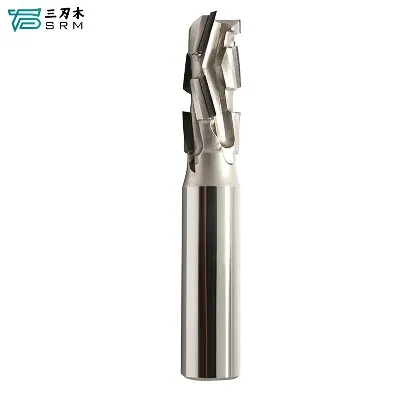

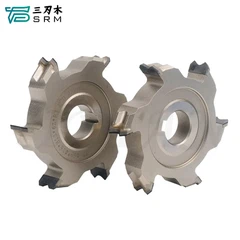
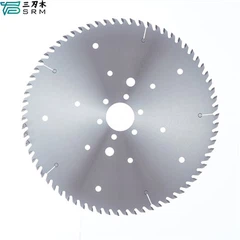


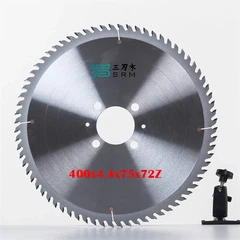

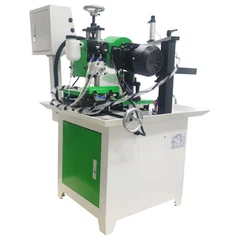
When an edge banded panel comes back with a wavy line, a gap you can feel with a fingernail, or a glue line so wide it looks like a mistake, the first instinct is to blame the banding tape or the glue. Most of the time, the real culprit sits earlier in the machine. The pre milling cutter is the quiet station on an edge bander that everyone walks past, and it is the one that decides whether the next thirty seconds of bonding ever stand a chance. If your edge quality has been drifting, this is where the story starts.
The job of a pre milling cutter is almost embarrassingly simple: shave a thin layer off the panel edge before the glue station gets anywhere near it. We are talking about a fraction of a millimeter - 0.1 to 0.5mm depending on the setup - but that tiny cut removes the saw marks, the chipped laminate, the crushed fiberboard edge, and the thickness variation that every panel picks up during sizing. Once that imperfect layer is gone, the edge banding tape meets a straight, flat, clean surface, and the glue can actually grip. Skip the pre-mill step, or run a dull pre milling cutter, and every flaw in the panel edge gets faithfully reproduced - and often amplified - in the finished joint.
Why does the pre milling cutter need diamond teeth instead of plain carbide? Because of what it cuts. Melamine panels, fireproof APL boards, paper veneer, MDF - these are some of the most abrasive surfaces in woodworking. Carbide dulls quickly against them in continuous production, and a dull cutter stops cutting cleanly long before it stops cutting at all. The result is a burnished, glazed edge that rejects glue. PCD, polycrystalline diamond, holds an edge for thousands of linear meters with minimal wear, which is why virtually every serious edge banding operation runs a diamond pre milling cutter and treats the cost as an investment in uptime, not an expense.
When you are comparing pre milling cutter options, the spec sheet is small but every number matters. Outside diameter: the common range runs from 60mm up to 150mm, and your machine's spindle and hood geometry dictates what fits - 125mm is a very common working size on edge banders from the major European builders. Inner diameter, the bore, usually comes in at 20mm or 30mm, and it must match the spindle exactly, not approximately. Edge height, H, is tied to the panel thickness range you actually run - 35mm, 40mm, and 45mm are the typical steps. Tooth count matters too: staggered configurations like Z(3+3) or Z(4+4) keep the cut smooth and the noise down across different feed speeds. Get any of these wrong and you get vibration, poor cut quality, or a tool that simply won't mount.
There is a second decision hiding inside the first: whether you need a solid diamond pre milling cutter or an insert version. Insert cutters carry a body - often aluminum alloy for light weight - with replaceable PCD inserts. They cost more up front but the body outlives many insert sets, which changes the economics for high-volume shops. Feisite makes both, and the standard range covers D60/D20, D80/D20, D100/D30, D125/D30 with H35 to H45, and D150/D30 with a heavier Z(4+4) tooth load for bigger machines. Whatever your line runs, the starting point is matching the bore and diameter to the spindle, then confirming the edge height against your panel thicknesses.
Material matters as much as geometry. A pre milling cutter spends its life on abrasive panels, so the diamond grade and the quality of the brazing decide how many linear meters you get before the edge goes soft. The measurable payoff shows up in four places: pre-milled surfaces accept glue better and bond tighter, accurate material removal means fewer rejects and reworks, diamond edges run for thousands of meters with minimal wear, and fewer replacements mean less downtime. That is the whole business case in one paragraph - better adhesion, less waste, longer life, lower cost per meter.
For a shop floor that runs melamine, paper veneer, fireproof APL, and flat veneer panels - the standard diet of cabinet and furniture production - the pre milling cutter is not optional equipment. It is the difference between a joint that disappears into the panel and one that announces itself every time someone runs a finger along the edge. The good news is that matching one to your machine is a ten-minute conversation if the supplier knows their tooling: tell them the edge bander brand, the spindle bore, and the panel thicknesses, and the right cutter falls out of the spec table.
That is the kind of conversation Huizhou Feisite Precision Tools is built for. Thirty-plus years in woodworking tooling, around 100 CNC machines, a daily capacity of about 2,000 pieces, and a catalogue that covers diamond pre milling cutters from 60mm to 150mm with both solid and insert styles. Their OEM and ODM service extends to logos, packaging, colors, and materials, and they will quote you a free sample before you commit a container. The pre milling cutter is a small part with an outsized effect on your finish - it deserves to be chosen like the production bottleneck it actually is.
Pre Milling Cutter: The Unsung Step in Flawless Edge Banding
Popular Products

Compression Bit With Chip Breaker
Compression Router Bit with Chip Breaker for Melamine coverd with Particle board

2 Flute Compression Router Bit
Compression Router Bit especially design for Melamine Board

62xH50x35 Carbide Inserts Spiral Cutter Head
Carbide Indexable Inserts Spiral Cutter Head Four Sided Spiral Cutter Shaft Woodworking Tool Helical Cutter Blade

D80xd20xH50 PCD CNC Edge Cutter Tools
Factory Price D80xd20xH20 Six Teeth CNC Edge Cutter Tools For Wood,Edge Banding Cutter Rough Trimming Cutter for KDT

68x16xH16 6T R2.5 PCD Fine Trimming Cutter For Edge Bander
High Wear Resistance 6 Flute Edge Banding Machine Alloy Steel Finishing Widely Utilized In Woodworking Trimming

D125*30*H35 Diamond Pre Milling Cutter
Woodworking Machinery Parts Tools D125*30*H35 Diamond PCD Pre Milling Spiral Edge Banding Cutter for SCM KDT HOMAG

Diamond Premilling Cutter 100x30x65 15T For HOMAG
Diamond premilling cutter HD 100x30x65 15T for HOMAG BRANDT edge banding machines.

SCM Profile Trimming Cutters
SCM 07L0027662B 07L0027669G TCT Carbide Profile Trimming Cutters• SCM TCT edge banding cutter• 07L0027662B SCM trimming
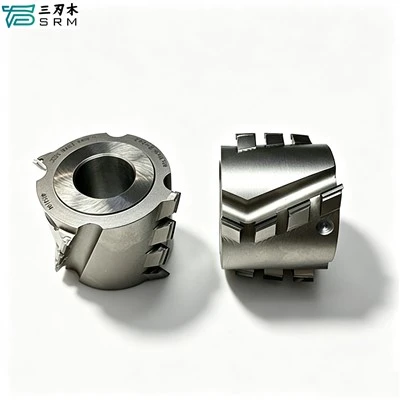
SCM Spare Parts
Diamond Jointing Cutter 07L0115304L 07L0150829G 80X56X30 Z2+2 for SCM Edge Banding 07L0115304L• 07L0150829G• 80X56X30•

Corner Round Shaper Cutters
959 Carbide Tipped 3-Wing Corner Round 3/4 Radius x 3-5/8 Dia x 1 x 1/2 & 3/4 Bore

Carbide Half Round Shaper Cutter Head
Half Round Shaper Cutters with Carbide Tipped 4-Wing, Customizable Radius from 1/8 to 1 inch with Bore 3/4 1 1-1/4

Disposable Pre-milling Cutter
Disposable pre-milling cutter for edgebanding machine

Radius Profile Insert Carbide
Radius Profile Carbide insert knifes These radius profile carbide insert blades all made of tunsten carbide materials,

Rectangle Carabide Reversible Insert Knives
How to choose a high-performance, cost-effective Carbide Insert blade? We adopt disposable cutter shafts originally to

Nesting Up/down PCD Router Bit 2+2
Designed for CNC nesting and panel processing, this 2+2 PCD compression spiral router bit helps achieve cleaner top and
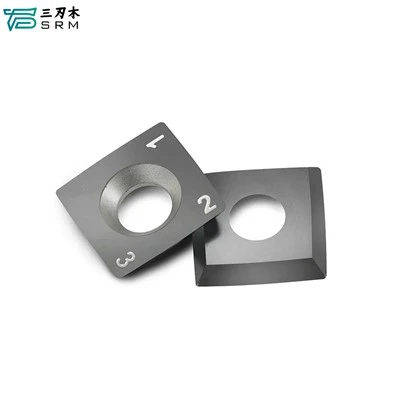
Carbide Insert Knife 15x15x2.5mm-30°-R150-4R0.5 For Helical Cutterhead
What Are Carbide Tool Inserts?Carbide cutting tools are precision machining tools mainly made of tungsten carbide.