







You can buy a tongue and groove router bit set for sixteen dollars, and you can buy one for a hundred and fifty. Both listings will call themselves tongue and groove router bits, both will show a tidy joint photo, and the cheap one will probably sell more. The gap between them is not brand markup. It's six or seven specifications that nobody translates for you, and the first one - shank size - decides whether the set even fits your router.
Start with the shank - the first line on any tongue and groove router bits listing, and the only spec that can send you home empty-handed. Shank is the smooth cylindrical section that goes into the collet, and it comes in two standard sizes: 1/2" (12.7mm) and 1/4" (6.35mm). A 1/2" shank is stiffer, which matters more than most beginners realize - the cutter head sticks out an inch or more from the collet, and at 20,000+ RPM that cantilever turns into vibration if the shank flexes. Big-diameter bits and deep passes belong on 1/2" shanks, and nearly every serious cabinet shop stocks 1/2" collets. A 1/4" shank is lighter and fits small trim routers and most CNC spindles, especially the ER11 collets common on desktop machines. So the rule of thumb: if your machine accepts 1/2", buy 1/2". If you only have 1/4", buy smaller diameter sets designed for it, and don't fight the machine.
The second spec is the stock thickness the set is matched to. Tongue and groove joinery is not one-size-fits-all - the tongue has to fit the groove with a hair of clearance, and both have to suit the board you're jointing. Tongue and groove router bits are sold against specific material: 3/4" stock is the most common for flooring and cabinet panels, 1/4" plywood sets exist for sheet-goods work, and 1" or 2" stock sets handle heavy timber. Buy the set that names your board thickness, not one that promises to do everything - the adjustable sets are the exception, and they earn their price.
That brings up set construction, the next fork in tongue and groove router bits. Two-piece sets are the classic: one bit cuts the tongue, the other cuts the groove, and they're factory-matched so the joint closes correctly. One-piece bits cut both with the same cutter by flipping the work or the bit, which is cheaper but needs careful setup. Adjustable sets use a shim or sliding cutter to cover a range of stock thicknesses - useful in a shop that joints different boards, less useful if you always work one size, because they're heavier and every adjustment is a chance to introduce play.
Within tongue and groove router bits, the profile is where the joint gets its look, and it's usually hidden in the product name. A plain T-shape gives a square, invisible seam - the workhorse for flooring and panels. V-notch sets add a shallow V-groove on the face along the joint line, which reads as a deliberate design feature and forgives slight height mismatches between boards. Wedge sets cut an angled, wedge-shaped joint used for stronger mechanical locking on certain applications. If the listing doesn't say which profile, ask - because the photo is often of the most flattering one.
Material is the spec that decides how long your tongue and groove router bits survive. Carbide-tipped (TCT) is the mainstream answer: a steel body with brazed carbide edges, tough and economical, right for most hardwood and softwood work. Solid carbide is one piece of carbide through and through - stiffer and better at small diameters and high-speed CNC work, but more brittle if you hit a nail. PCD (polycrystalline diamond) is the top shelf, for abrasive materials like MDF, HPL, and laminates where carbide edges erode quickly. For a typical shop, TCT is the sensible default and PCD is a calculation for production lines.
Two more numbers on tongue and groove router bits deserve a glance: depth of cut and shank-mounted bearings. Depth of cut tells you how much material one pass can remove - on tongue and groove bits it's usually modest, and that's fine, because two light passes beat one burning pass. And bearing-guided bits follow an edge automatically, while non-bearing bits need a fence or router table setup. For joinery, most people end up on a fence or table anyway, but it's worth knowing which kind you bought.
Then there's the production question, which the retail listings won't answer. If you're buying tongue and groove router bits in volume for a shop line, you're not shopping for one set - you're shopping for a supplier that will match the geometry to your stock, your machine, and your output. That's where a manufacturer comes in. Huizhou Feisite Precision Tools (FST) has been building woodworking tooling for over 30 years, runs modern CNC lines with ultrafine tungsten carbide, and covers the mortise-and-tenon family - straight bits, rabbet bits, dovetail cutters, T-slotting bits - with OEM and ODM service. A tongue and groove profile for your specific board thickness is exactly the kind of custom geometry a factory can dial in and repeat across batches.
Buying tongue and groove router bits well is a short checklist: shank that fits, stock the set names, construction type that matches your volume, profile you actually want, material that suits your wood, and a supplier who can reproduce the geometry when you order more. The sixteen-dollar set will cut a joint. The hundred-and-fifty-dollar one might too. The one that fits your machine and your material is the only one worth either price.
Tongue And Groove Router Bits: 1/2 Shank Vs 1/4 — And Every Spec That Matters
Popular Products

Compression Bit With Chip Breaker
Compression Router Bit with Chip Breaker for Melamine coverd with Particle board

2 Flute Compression Router Bit
Compression Router Bit especially design for Melamine Board

62xH50x35 Carbide Inserts Spiral Cutter Head
Carbide Indexable Inserts Spiral Cutter Head Four Sided Spiral Cutter Shaft Woodworking Tool Helical Cutter Blade

D80xd20xH50 PCD CNC Edge Cutter Tools
Factory Price D80xd20xH20 Six Teeth CNC Edge Cutter Tools For Wood,Edge Banding Cutter Rough Trimming Cutter for KDT

68x16xH16 6T R2.5 PCD Fine Trimming Cutter For Edge Bander
High Wear Resistance 6 Flute Edge Banding Machine Alloy Steel Finishing Widely Utilized In Woodworking Trimming

D125*30*H35 Diamond Pre Milling Cutter
Woodworking Machinery Parts Tools D125*30*H35 Diamond PCD Pre Milling Spiral Edge Banding Cutter for SCM KDT HOMAG

Diamond Premilling Cutter 100x30x65 15T For HOMAG
Diamond premilling cutter HD 100x30x65 15T for HOMAG BRANDT edge banding machines.

SCM Profile Trimming Cutters
SCM 07L0027662B 07L0027669G TCT Carbide Profile Trimming Cutters• SCM TCT edge banding cutter• 07L0027662B SCM trimming
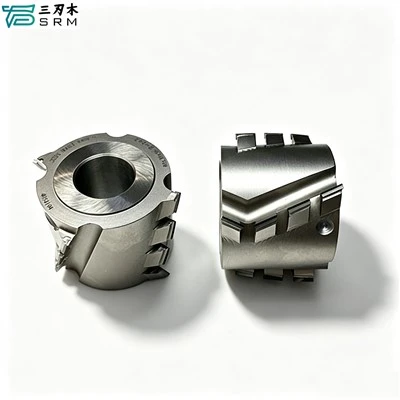
SCM Spare Parts
Diamond Jointing Cutter 07L0115304L 07L0150829G 80X56X30 Z2+2 for SCM Edge Banding 07L0115304L• 07L0150829G• 80X56X30•

Corner Round Shaper Cutters
959 Carbide Tipped 3-Wing Corner Round 3/4 Radius x 3-5/8 Dia x 1 x 1/2 & 3/4 Bore

Carbide Half Round Shaper Cutter Head
Half Round Shaper Cutters with Carbide Tipped 4-Wing, Customizable Radius from 1/8 to 1 inch with Bore 3/4 1 1-1/4

Disposable Pre-milling Cutter
Disposable pre-milling cutter for edgebanding machine

Radius Profile Insert Carbide
Radius Profile Carbide insert knifes These radius profile carbide insert blades all made of tunsten carbide materials,

Rectangle Carabide Reversible Insert Knives
How to choose a high-performance, cost-effective Carbide Insert blade? We adopt disposable cutter shafts originally to

Nesting Up/down PCD Router Bit 2+2
Designed for CNC nesting and panel processing, this 2+2 PCD compression spiral router bit helps achieve cleaner top and
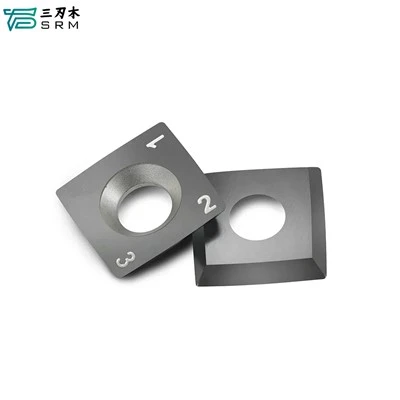
Carbide Insert Knife 15x15x2.5mm-30°-R150-4R0.5 For Helical Cutterhead
What Are Carbide Tool Inserts?Carbide cutting tools are precision machining tools mainly made of tungsten carbide.