





In woodworking, panel processing, acrylic cutting, and CNC aluminum machining, flute geometry has a direct effect on cutting resistance, chip evacuation, cutting temperature, groove quality, and tool life. Straight, single-flute, and O-flute router bits may look similar, but they are designed for different materials and machining conditions.
Common product names include straight router bit, straight bit, single flute router bit, straight flute router bit, straight plunge router bits, o flute router bit, and tct straight bit. Some of these terms are used interchangeably in the market, yet their cutting-edge design, construction, and intended applications are not identical.
Choosing the right cutter requires more than matching the diameter to the desired groove width. Buyers should also consider the workpiece material, cutting depth, spindle speed, feed rate, chip direction, machine rigidity, and required surface finish.
What Is a Straight Router Bit?
A straight router bit has cutting edges that run parallel, or nearly parallel, to the tool axis. It is commonly used for cutting grooves, dadoes, mortises, rebates, pockets, and square-bottom slots. It can also be used for edge trimming when the tool and machining setup provide suitable guidance.
The term straight bit usually refers to the same general tool category. Depending on the application, a straight cutter may have one, two, or more cutting edges. It can be manufactured from high-speed steel, solid carbide, or a steel body fitted with brazed carbide cutting tips.
The simple flute geometry makes a straight router bit suitable for handheld routers, router tables, and CNC routing machines. Typical workpiece materials include solid wood, MDF, particleboard, plywood, laminates, plastics, foam, and other composite panels.
A straight bit can produce a clean groove with relatively vertical sidewalls and a flat bottom. However, performance still depends on edge sharpness, tool runout, flute size, cutting depth, and chip evacuation. A suitable cutter used with the wrong parameters can still cause burning, vibration, or poor edge quality.
How Does a Straight Flute Router Bit Work?
A straight flute router bit has flutes extending along the axis of the tool rather than wrapping around the body in a spiral. During rotation, the cutting edges enter the material across much of their length at the same time.
Because the flutes do not have a pronounced upcut or downcut angle, a straight flute router bit produces less axial lifting or downward force than many spiral cutters. This can make it easier to control during shallow grooving, mortising, and general woodworking operations.
The linear cutting edges also make the tool useful for producing straight grooves, square-bottom slots, and relatively vertical sidewalls. A straight flute router bit is therefore widely used in cabinetry, furniture production, joinery, panel processing, and general CNC routing.
Its limitation is chip evacuation. A straight bit does not actively lift chips out of a deep groove as efficiently as an upcut spiral cutter. When cutting deep slots, sticky plastics, or materials that generate long chips, debris can remain near the cutting edge.
Poor chip evacuation increases friction and heat. In wood, this may produce burn marks. In plastic, it may cause melted edges or material buildup on the cutting edge. For deeper grooves, using multiple passes and maintaining a steady feed rate can reduce these problems. Compressed air or an effective dust extraction system may also be needed.
Why Choose a Single Flute Router Bit?
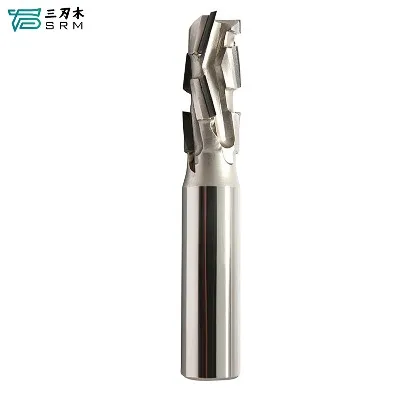
A single flute router bit has one main cutting edge and one large flute. Compared with a two-flute or multi-flute cutter of the same diameter, it provides more space for chips to move away from the cutting zone.
This large chip channel is especially useful when machining acrylic, PVC, ABS, aluminum composite panels, and certain aluminum alloys. These materials can produce relatively large chips and may melt or adhere to the tool when heat is not removed efficiently.
A single flute router bit also gives each cutting edge more time to clear chips before it enters the material again. At the correct feed rate, the removed chips carry heat away from the cutting zone. This helps reduce repeated rubbing between the tool and the workpiece.
The design is well suited to high-speed spindles, small-diameter cutters, and light CNC routers that cannot operate efficiently with a high flute count. When the spindle speed is high, a single flute router bit makes it easier to maintain an adequate chip load without requiring an excessive machine feed rate.
Fewer flutes do not mean that the machine can run at any feed speed. Tool diameter, cutting-edge length, spindle power, workholding, and machine rigidity still determine the safe machining range. Excessive tool overhang or an aggressive depth of cut can cause chatter, deflection, edge chipping, or tool breakage.
What Is an O Flute Router Bit?
An o flute router bit is designed with a rounded flute profile that provides a large, smooth path for chip evacuation. The flute resembles an open "O" shape when viewed in cross-section, although the exact geometry varies by manufacturer and application.
This tool is commonly used for machining acrylic, PVC, ABS, polycarbonate, aluminum composite panels, and non-ferrous metals. Many O-flute cutters use a single cutting edge because the combination of one edge and a large flute provides the chip space needed for these materials.
Thermoplastics can soften when heat builds up around the tool. If the chips are not removed quickly, they may melt and stick to the cutting edge. The material can then be dragged back through the cut, leaving cloudy edges, burrs, dimensional errors, or a rough finish.
A sharp o flute router bit helps remove larger, well-formed chips instead of rubbing the material into fine dust. When tool geometry and machining parameters are properly matched, the result is a clearer acrylic edge and a more stable cutting process.
The same chip-control principle is useful in aluminum machining. Aluminum can form a built-up edge when hot chips adhere to the cutting surface. The large flute of an o flute router bit reduces congestion around the edge and creates more space for chip removal. Suitable lubrication or air cooling may still be required, depending on the aluminum grade and machining operation.
O-flute cutters are available in upcut and downcut configurations. An upcut design moves chips toward the top of the workpiece and is useful for deeper grooves and profile cutting. A downcut design pushes chips downward and can protect the upper surface of a thin sheet. However, it also directs debris toward the bottom of the cut, so adequate clearance and controlled cutting depth are important.
Single Flute Router Bit vs. O Flute Router Bit
The terms single flute router bit and o flute router bit are sometimes treated as if they mean the same thing. They overlap, but they describe different characteristics.
"Single flute" describes the number of cutting edges. "O flute" describes the shape of the chip channel and the cutting geometry. Many O-flute cutters have one cutting edge, but not every single-flute tool has an O-shaped flute.
A standard single flute router bit may be designed for wood, plastic, foam, or another material. An o flute router bit is more specifically optimized for chip evacuation in plastics and non-ferrous materials.
For acrylic and plastic machining, the choice should be based on flute polish, rake angle, edge sharpness, chip direction, and recommended material range. For aluminum, buyers should also check the carbide grade, coating, flute geometry, and whether the cutter is intended for dry cutting, air cooling, or lubricated machining.
The product name alone does not provide enough information. Material compatibility and cutting geometry matter more.
What Are Straight Plunge Router Bits Used For?
straight plunge router bits are designed to enter the workpiece vertically before moving sideways through the material. This makes them suitable for closed grooves, blind slots, mortises, pockets, and internal recesses that cannot be started from the edge of a panel.
The bottom cutting-edge design is important. Some straight cutters can perform limited plunging, while others are intended mainly for side cutting and should enter the material from an existing opening or the edge of the workpiece.
When purchasing straight plunge router bits, buyers should confirm whether the tool has a center-cutting or bottom-cutting design. They should also check whether the bottom edges cover the full diameter or leave a small uncut area near the center.
On a CNC router, ramping or helical entry is often smoother than plunging vertically into the material. A gradual entry distributes the cutting load, reduces pressure on the tool tip, and creates more space for chips to escape.
Direct vertical entry may still be necessary when the toolpath or component geometry does not allow a ramp. In this situation, straight plunge router bits with an appropriate bottom-edge structure can reduce the risk of excessive tool loading.
Deep pockets should normally be machined in several passes. Trying to reach the full depth in a single plunge can overload the tip, trap chips below the tool, and generate unnecessary heat.
What Is a TCT Straight Bit?
A tct straight bit uses tungsten carbide-tipped cutting edges attached to a steel tool body. The steel body provides toughness and structural support, while the carbide cutting edges provide hardness and wear resistance.
This construction is widely used for larger woodworking router bits because it balances cutting performance, durability, and manufacturing cost. A tct straight bit can be used for grooving, mortising, trimming, and general cutting in solid wood, MDF, particleboard, plywood, and laminated panels.
Compared with a basic high-speed steel cutter, carbide-tipped edges generally remain sharp longer when cutting dense wood or abrasive, resin-rich engineered panels. Tool life still depends on carbide quality, brazing strength, grinding accuracy, and operating parameters.
A solid carbide cutter is made primarily from carbide rather than using carbide tips brazed to a steel body. Solid carbide provides high rigidity and makes it possible to grind smaller diameters and more complex flute geometries. It is frequently used for CNC routing, precision cutting, acrylic machining, and aluminum processing.
Solid carbide is hard and wear-resistant, but it is less tolerant of impact, excessive runout, and unstable clamping. A solid carbide tool can chip or break if it is used with excessive overhang or severe vibration.
Neither construction is automatically better for every application. A large-diameter tct straight bit may be a practical choice for routine woodworking and panel grooving. A solid carbide single flute router bit or o flute router bit may be more suitable for small-diameter, high-speed CNC machining of plastics and aluminum.
Straight Router Bit vs. Spiral Router Bit
A straight router bit cuts with linear edges, while a spiral cutter uses helical flutes. The difference affects cutting action, chip movement, surface pressure, and machine load.
Spiral cutters generally enter the material progressively. Their shearing action can reduce cutting shock and produce cleaner edges in plywood, veneer, laminate, and difficult-grain wood. Upcut spirals improve chip evacuation, while downcut spirals help protect the upper surface.
A straight flute router bit does not create the same lifting or downward force. It can be a suitable option for square-bottom grooves, shallow cuts, mortising, and applications where strong axial pressure is undesirable.
Straight cutters are also available in many sizes and constructions. A tct straight bit can offer a cost-effective solution for high-volume woodworking, while a smaller solid carbide straight bit may be used for precision CNC work.
The correct choice depends on the material, visible surface, groove depth, workholding method, and chip-control requirements. Spiral geometry is useful, but it is not necessary for every cut.
How to Select the Right Router Bit
The workpiece material should be the first selection factor. For solid wood, MDF, particleboard, and plywood, a straight router bit or tct straight bit can handle many grooving and mortising operations. For acrylic, PVC, ABS, and aluminum composite panels, a single flute router bit usually offers more chip space.
When machining acrylic, engineering plastics, or aluminum, a material-specific o flute router bit may provide better chip evacuation and reduce heat buildup. The exact geometry should match the material rather than relying on a general-purpose description.
Cutting diameter determines groove width and influences tool strength. Small diameters are useful for detailed profiles and narrow slots, but they are more sensitive to deflection. Larger diameters provide greater rigidity but require more spindle power and create higher cutting forces.
The cutting-edge length should cover the required machining depth without being much longer than necessary. A long flute and excessive tool overhang reduce rigidity and increase the likelihood of chatter.
Shank diameter must match the router collet. Common sizes include 1/4 inch, 1/2 inch, 6 mm, 8 mm, and 12 mm. An incorrect collet, insufficient clamping length, or contamination inside the collet can increase runout and reduce tool life.
Flute direction also matters. Upcut geometry provides efficient chip evacuation but may lift the workpiece or affect the upper surface. Downcut geometry can hold the sheet down and protect the top edge, but chips may become compressed near the bottom of the groove.
For pocketing or blind grooves, check whether the selected straight bit can plunge. If repeated vertical entry is required, use straight plunge router bits designed with suitable bottom-cutting edges.
Matching Spindle Speed and Feed Rate
Spindle speed and feed rate should be considered together. A high spindle speed combined with a very slow feed causes the edge to rub rather than cut efficiently. This produces heat, shortens tool life, and can melt plastic or burn wood.
Running too fast can overload the cutting edge and cause vibration or breakage. The correct setting should produce properly formed chips and a stable cutting sound without excessive heat.
A single flute router bit often allows a practical chip load at high spindle speeds because only one edge enters the material during each revolution. Multi-flute cutters require a higher feed rate to achieve the same chip load per tooth.
Tool diameter, flute count, material hardness, cutting depth, and machine rigidity all influence the final parameters. Published cutting data should be treated as a starting point, followed by controlled adjustments based on chip shape, surface finish, spindle load, and cutting temperature.
Common Cutting Problems and Their Causes
Burn marks in wood are often caused by a dull edge, slow feed, excessive spindle speed, or chips remaining in the groove. Resin buildup on the tool can create the same problem even when the carbide edge is still usable.
Melted plastic edges usually indicate excess heat or poor chip evacuation. A sharper single flute router bit or o flute router bit may help, but the feed rate, spindle speed, and air cooling should also be checked.
Burrs on aluminum can result from a worn edge, unstable workholding, incorrect chip load, or built-up material on the flute. A polished o flute router bit can improve chip flow, but lubrication and chip removal may still be required.
Chatter marks are commonly related to tool overhang, spindle runout, loose clamping, weak workholding, or an aggressive depth of cut. Reducing overhang and using the shortest suitable cutter often improves stability.
A rough groove bottom may be caused by an unsuitable bottom-edge design or repeated recutting of trapped chips. If vertical entry is part of the process, straight plunge router bits should be checked for proper bottom-cutting geometry.
What Information Should Buyers Provide to a Router Bit Supplier?
For standard or customized router bit sourcing, the supplier should receive more than a product name. The workpiece material, cutting diameter, cutting depth, shank diameter, spindle speed, feed range, machine type, and required surface finish should all be specified.
If the application involves acrylic or aluminum, buyers should also explain whether the process uses compressed air, mist lubrication, or dry cutting. For thin sheets, the workholding method and preferred chip direction are important.
Samples, drawings, or photographs can help identify whether a straight router bit, single flute router bit, o flute router bit, or another cutting geometry is more appropriate. Providing complete machining conditions reduces trial runs and makes it easier to evaluate tool life and finished-part quality.
Feisite supplies TCT router bits, solid carbide router bits, and other CNC woodworking cutting tools. Different cutting diameters, cutting-edge lengths, shank sizes, flute structures, and OEM or ODM requirements can be developed for distributors, furniture manufacturers, panel-processing factories, and CNC machining companies.
The best cutter is the one that matches the material, machine, toolpath, and production target. A well-selected straight bit can provide reliable grooving performance in wood and panels. A single flute router bit can create the chip space needed for plastics, while an o flute router bit can improve chip control in acrylic and aluminum. Correct selection reduces heat, protects the cutting edge, and supports more consistent production.
Tags: Straight Router Bit, Straight Bit, Single Flute Router Bit, Straight Flute Router Bit, Straight Plunge Router Bits, O Flute Router Bit, TCT Straight Bit, CNC Router Bits, Woodworking Router Bits, Acrylic Router Bits