



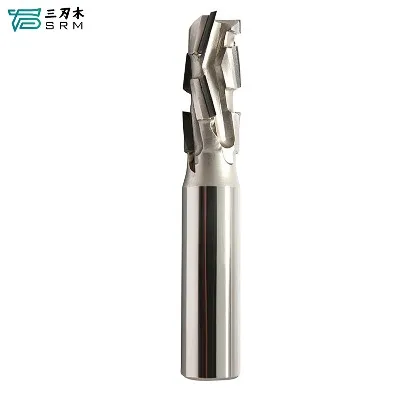





Hey there! As a supplier of O Flute Router Bits, I often get asked by customers about how to choose the right flute configuration for their specific needs. It can be a bit confusing, especially if you're new to the world of router bits. But don't worry, I'm here to break it down for you in a simple and easy-to-understand way.
First off, let's talk about what a flute is in the context of a router bit. The flutes are the spiral grooves on the cutting edge of the router bit. They play a crucial role in how the bit performs, affecting things like chip evacuation, cutting speed, and the quality of the cut.


Types of Flute Configurations
There are several common flute configurations for O Flute Router Bits, each with its own advantages and best-use scenarios.
Single Flute
Single flute router bits are great for roughing cuts and working with softer materials like plastics and softwoods. They have a single spiral groove that helps in quickly removing large amounts of material. The single flute design also allows for faster chip evacuation, reducing the chances of clogging. However, they might not give the smoothest finish compared to multi-flute bits. If you're working on a project where speed is more important than a super-smooth finish, a single flute O Flute Router Bit could be your go-to.
Double Flute
Double flute router bits are a popular choice for a wide range of applications. They offer a good balance between cutting speed and finish quality. With two flutes, they can remove material efficiently while still providing a relatively smooth cut. Double flute bits are suitable for both soft and hardwoods, as well as some composite materials. They are often used for general-purpose routing tasks like edge profiling and dado cuts.
Triple Flute
Triple flute router bits are designed for even better chip evacuation and a smoother finish compared to double flute bits. They are ideal for working with harder materials and when you need a high-quality finish. The additional flute helps in distributing the cutting load more evenly, reducing heat build-up and extending the life of the bit. Triple flute bits are commonly used in precision routing applications, such as cabinet making and furniture production.
Multi-Flute (Four or More Flutes)
Multi-flute router bits, with four or more flutes, are used for achieving the smoothest possible finish. They are typically used for fine detailing and finishing cuts. However, they may not be as efficient at removing large amounts of material as single or double flute bits. These bits are often used in applications where a high level of precision and a flawless finish are required, like in the production of musical instruments or high-end furniture.
Factors to Consider When Choosing the Right Flute Configuration
Material You're Working With
The type of material you're routing is one of the most important factors in choosing the right flute configuration. As mentioned earlier, softer materials like plastics and softwoods can be easily routed with single or double flute bits. Harder materials, such as hardwoods and metals, require multi-flute bits for better performance and a smoother finish. For example, if you're working on a project with oak wood, a triple or multi-flute O Flute Router Bit would be a better choice to ensure a clean and precise cut.
Cutting Speed and Feed Rate
Your cutting speed and feed rate also play a role in determining the right flute configuration. If you're planning to use a high cutting speed, a bit with fewer flutes might be more suitable as it allows for better chip evacuation. On the other hand, if you're working at a slower speed, a multi-flute bit can provide a smoother finish. It's important to find the right balance between cutting speed, feed rate, and flute configuration to get the best results.
Desired Finish Quality
The quality of the finish you want to achieve is another crucial factor. If you're looking for a rough cut and speed is your priority, a single flute bit will do the job. But if you need a smooth, polished finish, a multi-flute bit is the way to go. For instance, if you're making a decorative edge on a wooden tabletop, a multi-flute O Flute Router Bit will give you a professional-looking finish.
Type of Routing Operation
The type of routing operation you're performing also affects your choice of flute configuration. For example, if you're doing a plunge cut, a bit with good chip evacuation is essential to prevent the bit from getting stuck. A single or double flute bit would be a good option for plunge cuts. If you're doing a profile cut or a detailed routing task, a multi-flute bit can provide more control and a better finish.
Examples of Specific Applications
Let's take a look at some specific applications and the recommended flute configurations for each.
Edge Profiling
For edge profiling, double or triple flute router bits are often used. They can provide a smooth and clean edge finish. Whether you're working on a cabinet door or a wooden picture frame, these bits will give you the precision and quality you need. You can check out our Straight Router Bit for edge profiling tasks.
Dado Cuts
Dado cuts require a bit that can remove material efficiently and provide a clean bottom and sides. Double or triple flute bits are suitable for dado cuts. They can handle the depth of the cut and ensure a smooth surface. Our Round Slotting Router Bit is a great option for dado cuts.
Fine Detailing
When it comes to fine detailing, multi-flute router bits are the best choice. They can create intricate designs and provide a high-quality finish. For example, if you're making a decorative inlay or a detailed carving, a multi-flute O Flute Router Bit will give you the precision and smoothness you need. You might also be interested in our Tapered Ball Nose Bit for fine detailing work.
Conclusion
Choosing the right flute configuration for an O Flute Router Bit is all about understanding your specific needs and the factors that affect the performance of the bit. By considering the material you're working with, the cutting speed and feed rate, the desired finish quality, and the type of routing operation, you can make an informed decision.
If you're still not sure which flute configuration is right for your project, don't hesitate to reach out. As a supplier of O Flute Router Bits, we have the expertise and experience to help you find the perfect bit for your needs. Whether you're a professional woodworker or a DIY enthusiast, we're here to support you in your routing projects. Contact us today to start a conversation about your requirements and let's find the best O Flute Router Bit for you!
References
- Woodworking Magazine - "Understanding Router Bit Flutes"
- Router Bit Manufacturer's Guides
- Online Woodworking Forums and Communities


