





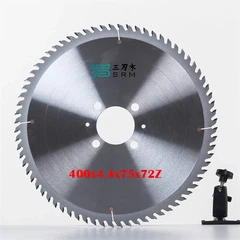


What is the maximum RPM (revolutions per minute) for a scoring saw blade?
As a supplier of Scoring Saw Blades, I often encounter questions from customers regarding the maximum RPM of these blades. Understanding the maximum RPM is crucial for ensuring both the safety and efficiency of the cutting process.
Factors Affecting the Maximum RPM of a Scoring Saw Blade
The maximum RPM of a scoring saw blade is determined by several factors. One of the primary factors is the blade's diameter. Generally, smaller diameter blades can handle higher RPMs compared to larger ones. This is because the centrifugal force acting on the blade increases with the square of the rotational speed and the radius of the blade. A larger blade spinning at a high RPM will experience greater stress, which can lead to blade deformation or even breakage.
Another important factor is the blade's material and construction. Blades made from high - quality materials, such as carbide - tipped blades, are often able to withstand higher RPMs. Carbide is a very hard and durable material that can resist the heat and stress generated during high - speed cutting. The design of the blade, including the number and shape of the teeth, also plays a role. Blades with a more optimized tooth design can cut more efficiently at higher speeds, reducing the risk of overheating and blade damage.
The type of material being cut also affects the maximum RPM. Softer materials, like wood, can often be cut at higher RPMs compared to harder materials, such as metal or stone. When cutting hard materials, the blade needs to exert more force, and higher RPMs can cause excessive wear and tear on the blade.
Determining the Maximum RPM
Most scoring saw blades come with a manufacturer - specified maximum RPM rating. This rating is based on extensive testing and engineering calculations to ensure the blade's safe and efficient operation. It is important to always follow this rating to avoid any safety hazards.
To determine the appropriate RPM for a specific cutting task, you need to consider the factors mentioned above. For example, if you are using a small - diameter carbide - tipped scoring saw blade to cut soft wood, you may be able to operate it at a relatively high RPM. However, if you are using a larger blade to cut a hard material, you will need to reduce the RPM to prevent blade damage.
Safety Considerations
Operating a scoring saw blade at an RPM higher than its maximum rating is extremely dangerous. At high RPMs, the blade can experience excessive stress, which can cause it to break. A broken blade can send sharp fragments flying at high speeds, posing a serious risk to the operator and anyone in the vicinity.
In addition to the risk of blade breakage, operating at an improper RPM can also lead to poor cutting quality. The blade may overheat, causing the material to burn or the blade to dull more quickly. This can result in a rough cut and may require additional finishing work.
Applications and RPM Requirements
Scoring saw blades are commonly used in woodworking and other industries for making precise cuts. In woodworking, they are often used to score the surface of the wood before making a full - depth cut. This helps to prevent splintering and ensures a clean, smooth cut.
For general woodworking applications, a scoring saw blade with a diameter of around 4 - 6 inches can typically operate at RPMs ranging from 3000 to 10000. However, for larger blades or when cutting harder materials, the RPM may need to be reduced.
In industrial applications, such as cutting metal or stone, the RPM requirements are usually lower. Metal - cutting scoring saw blades may have a maximum RPM of around 2000 - 3000, depending on the blade's size and the type of metal being cut.
Our Product Offerings
As a supplier of Scoring Saw Blades, we offer a wide range of products to meet different customer needs. Our blades are made from high - quality materials and are designed to provide optimal performance and durability.


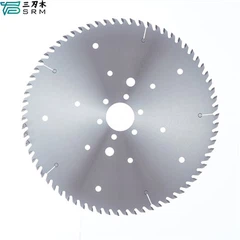
We also offer Grooving Saw Blade and Saw Blade for Sliding Table Machine in addition to our Scoring Saw Blade product line. These products are engineered to work efficiently at their recommended RPMs, ensuring high - quality cuts and long - lasting performance.
Conclusion
Understanding the maximum RPM of a scoring saw blade is essential for safe and efficient cutting. By considering factors such as blade diameter, material, and the type of material being cut, you can determine the appropriate RPM for your cutting task. Always follow the manufacturer's recommended RPM rating to ensure the safety of the operator and the quality of the cut.
If you are interested in purchasing scoring saw blades or have any questions about our products, we encourage you to contact us for a detailed discussion. We are committed to providing high - quality products and excellent customer service. Whether you are a professional woodworker or an industrial manufacturer, we can help you find the right blade for your needs.
References
- Woodworking Machinery Handbook
- Industrial Cutting Tools: Principles and Applications


