








Quantum computing is at the forefront of technological innovation, offering the potential to solve complex problems that are currently intractable for classical computers. As the field progresses, efficient data management becomes increasingly crucial. In this context, compression bits play a significant and multi - faceted role in quantum computing data management. As a compression bits supplier, I am well - placed to discuss how these components can revolutionize the way quantum systems handle data.
Understanding Compression Bits
Before delving into their role in quantum computing, it's essential to understand what compression bits are. Compression bits are used to reduce the size of data by encoding information in a more efficient way. In classical computing, data compression is a well - established technique that helps save storage space and reduce the time required to transfer data. In quantum computing, the concept is similar, but the nature of quantum data, which is based on qubits rather than classical bits, adds a new layer of complexity.
Qubits, the fundamental units of quantum information, can exist in a superposition of states, allowing them to represent multiple values simultaneously. This property not only enables quantum computers to perform certain tasks much faster but also leads to a rapid growth in the amount of data generated. Compression bits in quantum computing are designed to handle this data explosion effectively. They compress quantum states and quantum information, reducing the number of qubits needed to store or process a given amount of data.


The Role of Compression Bits in Quantum Data Storage
One of the primary challenges in quantum computing is the limited availability of stable qubits. Qubits are highly sensitive to environmental noise and decoherence, which can cause errors in computations. By using compression bits to reduce the number of qubits required for data storage, we can optimize the use of these scarce resources.
Compression bits can encode multiple qubits' information into a smaller set of qubits. This process is similar to how classical data compression algorithms reduce the number of bits needed to represent a file. For example, lossless data compression techniques in quantum computing can be used to store large quantum datasets without losing any information. This is particularly important for applications such as quantum simulation, where large amounts of data about quantum systems need to be stored and analyzed.
Moreover, compression bits can also improve the stability of quantum storage. Since fewer qubits are involved in storing the same amount of data, there is less exposure to environmental factors that can cause decoherence. This means that the quantum data is more likely to remain intact over time, leading to more reliable results in quantum computations.
Compression Bits in Quantum Data Transmission
In addition to storage, data transmission is another critical aspect of quantum computing. Quantum communication networks, which are designed to transmit quantum information securely, face challenges related to the limited bandwidth and the high error rates of quantum channels. Compression bits can play a vital role in overcoming these challenges.
By compressing quantum data before transmission, we can reduce the amount of information that needs to be sent through the quantum channel. This not only saves bandwidth but also reduces the probability of errors during transmission. For example, in quantum key distribution (QKD), which is used to establish secure encryption keys, compression bits can be used to compress the quantum states representing the keys. This allows for faster and more reliable key exchange, enhancing the security of communication systems.
Furthermore, compression bits can help in the integration of quantum and classical communication networks. As quantum computing becomes more mainstream, it will be necessary to transfer data between quantum and classical systems. Compressed quantum data can be more easily converted and transmitted across these different types of networks.
Compression Bits and Quantum Algorithm Optimization
Quantum algorithms are the heart of quantum computing, designed to solve specific problems more efficiently than classical algorithms. Compression bits can significantly contribute to the optimization of these algorithms.
Many quantum algorithms require a large number of qubits to perform complex calculations. By using compression bits, we can reduce the qubit requirements of these algorithms, making them more feasible to implement on current and near - term quantum hardware. For example, in quantum machine learning, which aims to use quantum computing to improve machine - learning algorithms, compression bits can help in reducing the computational resources needed for training and inference.
Compression bits can also enhance the efficiency of quantum algorithms by reducing the number of operations required. When data is compressed, the quantum computer can process it more quickly, leading to faster execution times. This is particularly important for applications where real - time processing is required, such as in financial risk analysis or weather forecasting.
Our Compression Bits Offerings
As a compression bits supplier, we are committed to providing high - quality products that meet the needs of the quantum computing industry. Our compression bits are designed using the latest technologies and materials to ensure optimal performance.
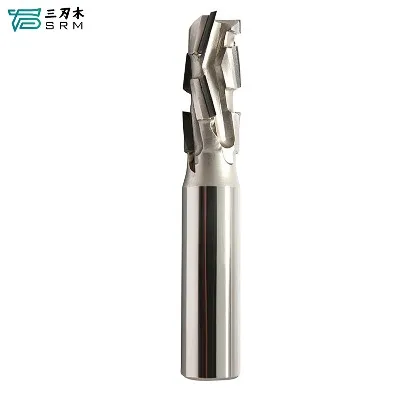
We offer a wide range of compression bits, each tailored to different applications in quantum computing. For example, our O Flute Router Bit is designed for precision data compression in quantum storage applications. It can efficiently compress large quantum datasets without losing any information, ensuring the integrity of the stored data.
Our Spiral Up Cut Bits are ideal for quantum data transmission. They can quickly compress quantum states, reducing the bandwidth requirements and improving the reliability of data transfer in quantum communication networks.
In addition, our Lock Hole Router Bit is designed for use in quantum algorithm optimization. It can help in reducing the qubit requirements of complex quantum algorithms, making them more accessible on current quantum hardware.
Contact Us for Procurement
If you are involved in quantum computing research or development and are looking for high - quality compression bits, we invite you to contact us for procurement. Our team of experts is ready to assist you in selecting the right compression bits for your specific needs. We can provide detailed technical information, product samples, and competitive pricing. Whether you are working on a small - scale quantum experiment or a large - scale quantum computing project, we have the solutions to meet your requirements.
References
- Nielsen, M. A., & Chuang, I. L. (2010). Quantum Computation and Quantum Information: 10th Anniversary Edition. Cambridge University Press.
- Devitt, S. J., Munro, W. J., & Nemoto, K. (2013). Quantum error correction for beginners. Reports on Progress in Physics, 76(7), 076001.
- Preskill, J. (2018). Quantum Computing in the NISQ era and beyond. Quantum, 2, 79.


