








Hey there, space enthusiasts and tech-savvy folks! I'm a supplier of Compression Bits, and today we're diving into an exciting question: Can compression bits be used in space exploration data transmission?
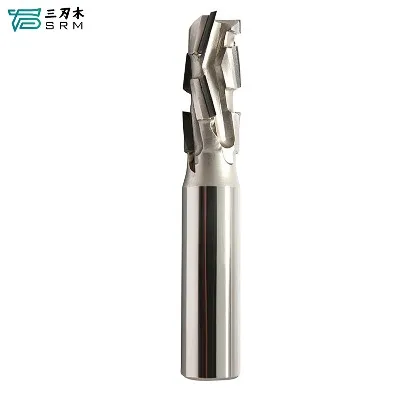
First off, let's talk a bit about what compression bits are. Compression bits are a type of solid carbide router bits that are designed to provide clean cuts on both the top and bottom of the workpiece. You can find out more about them Compression Bits. They're pretty handy in various industrial applications here on Earth, but the idea of using them in space exploration data transmission is a whole different ballgame.
In space exploration, data transmission is a crucial aspect. The distance between spacecraft and Earth is vast, and the amount of data that needs to be sent back is enormous. Think about all the images, scientific measurements, and telemetry data that come from probes, rovers, and satellites. Transmitting this data through the vacuum of space is no easy feat.


One of the main challenges in space data transmission is bandwidth. Bandwidth refers to the amount of data that can be sent in a given amount of time. Since the available bandwidth for space communication is limited, we need to find ways to make the most of it. That's where data compression comes in.
Data compression is the process of reducing the size of data without losing too much of its essential information. By compressing data, we can send more data in the same amount of bandwidth. This is where compression bits might have a role to play.
Now, you might be wondering how compression bits, which are physical cutting tools, could be related to data compression. Well, the concept of compression is the key here. Just like compression bits compress the material they cut, data compression algorithms compress digital information.
Let's take a look at some of the benefits of using data compression in space exploration data transmission. First of all, it saves time. By reducing the size of the data, we can transmit it faster. This is especially important when we're dealing with time-sensitive data, such as real-time scientific measurements or emergency communication.
Secondly, it saves energy. Transmitting data requires energy, and the less data we need to send, the less energy we consume. This is crucial for spacecraft, which have limited power sources. By using data compression, we can extend the lifespan of the spacecraft's power supply.
But how can compression bits specifically contribute to this? Well, although compression bits themselves are not directly involved in the digital data compression process, the concept of compression that they represent can inspire new ways of thinking about data compression algorithms.
For example, the design of compression bits is optimized to achieve the best possible compression of the material they cut. Similarly, data compression algorithms can be optimized to achieve the best possible compression of digital data. By studying the principles behind compression bits, we might be able to develop more efficient data compression algorithms for space exploration.
Another aspect to consider is the reliability of data transmission. In space, there are many factors that can interfere with data transmission, such as radiation, solar flares, and cosmic rays. These factors can cause errors in the transmitted data. Data compression can help mitigate these errors by reducing the amount of data that needs to be transmitted.
Let's also talk about the different types of data that are transmitted in space exploration. There are images, which are often very large in size. Compressing these images can significantly reduce their size without sacrificing too much quality. For example, the End Mills for Roughing are used for rough machining, and in a similar way, we can use data compression to "roughly" reduce the size of the images.
There are also scientific measurements, such as temperature, pressure, and chemical composition. These data are often in the form of numerical values, and they can also be compressed using appropriate algorithms.
Now, let's address some of the challenges of using data compression in space exploration. One of the main challenges is the complexity of the compression algorithms. Some compression algorithms are very complex and require a lot of computational power. This can be a problem for spacecraft, which have limited computing resources.
Another challenge is the need for standardization. In order for data compression to be effective, all parties involved in the data transmission process need to use the same compression algorithms. This requires international cooperation and standardization efforts.
Despite these challenges, the potential benefits of using data compression in space exploration are significant. And as a supplier of Compression Bits, I'm excited to see how the concept of compression can be applied to space data transmission.
If you're in the space exploration industry or any other industry that requires efficient data transmission, I encourage you to consider the benefits of data compression. And if you're looking for high-quality Compression Bits for your industrial applications, be sure to check out our Compression Bits page.
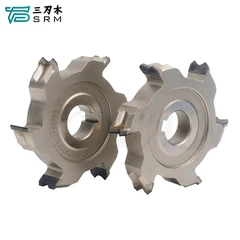
We also offer other types of solid carbide router bits, such as Tapered Ball Nose Bit and End Mills for Roughing. These bits are designed to provide precise and efficient cutting performance.
If you're interested in purchasing our products or have any questions about data compression in space exploration, feel free to reach out. We're always happy to have a chat and discuss how our products can meet your needs.
In conclusion, while compression bits themselves are not directly used in space exploration data transmission, the concept of compression that they represent can have a significant impact on the development of more efficient data compression algorithms. By leveraging the principles of compression, we can overcome the challenges of limited bandwidth and energy in space exploration and ensure the reliable transmission of valuable data.
References
- "Fundamentals of Space Data Systems" by NASA
- "Data Compression: The Complete Reference" by Mark Nelson


