





A cabinet shop in Ontario emailed me last month. They were cutting veneered plywood on a CNC router and the top edge kept chipping. They had already ordered a 1/4 inch compression router bit from a catalog, and they wanted to know why the tear-out was still there. The answer took one question: how thick is the panel, and how long is the cutting flute? The panel was 18 millimeters, and the bit had a 12 millimeter cutting length. The compression zone was doing its job, but the bit was simply too short for the material, and the wrong size does not fix itself. That is the whole point of this guide. A compression router bit is the right answer for double-sided clean cuts, but only when the size, the flutes, and the shank match your material, and the right compression router bit cuts both faces clean while the wrong one chips both faces.
Send these three numbers, or the bit is a guess
Before you buy any compression router bit, write down three numbers. The material thickness, because the cutting length must cover the full panel, and a bit too short leaves the bottom edge unprotected. The finish requirement, whether both faces need clean edges or only one, because that decides if you need a true compression geometry at all. And your spindle speed and feed rate, because a compression bit runs best at the RPM and feed the flute design expects, and wrong speeds cause burning or chipping even with the right bit. A supplier who asks for these three numbers before recommending a size is doing you a favor. One who sells purely on price is selling you the next phone call.
Sizes: diameter, cutting length, and shank
Size is three separate numbers, and buyers mix them up all the time. Cutting diameter is the width of the groove the bit makes, and common sizes run 6, 8, 10, 12, and 16 millimeters, with 1/4 and 1/2 inch being the standard inch sizes. Cutting length is how deep the flutes reach, and it must exceed your panel thickness, not match it, because the compression zones need room above and below the material. Shank diameter is the part that grips the collet, and 1/4 and 1/2 inch shanks are the norm, with 8 and 12 millimeter common on metric machines. Many shops buy a 1/4 inch shank bit for a 1/4 inch panel and find the cutting length is too short for the job, exactly like the Ontario cabinet shop. Check all three numbers, not just the diameter, because every dimension on a compression router bit is load-bearing.
Flutes and geometry: why compression cuts clean on both faces
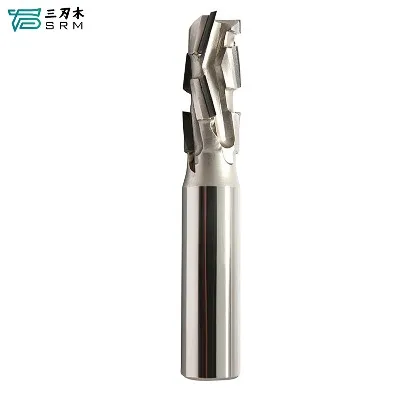
The magic of a compression router bit is that it cuts clean on both sides at once. The bottom section of the flute is upcut, lifting the chip and shearing the bottom face downward, while the top section is downcut, pushing the material down and shearing the top face. The two zones meet in the middle, compressing the chip between them, which is where the name comes from. Two-flute bits are the workhorse for plywood, melamine, and laminated panels, and three-flute versions cut smoother and last longer at production feeds, but they need higher spindle power. The flute length sets where the transition sits, so a bit with the wrong transition height leaves a visible line in the middle of a thick panel. Match the geometry to the material, and the bit disappears into the cut. When the flute zones line up with the panel faces, a good compression router bit leaves a surface you could sell straight off the machine.
When a compression router bit is the wrong choice
A compression router bit is not the answer to every cut, and knowing when to skip it saves money. For thin material, under about 6 millimeters, the compression zones have no room to work, and a straight upcut or downcut bit is the better tool. For shallow grooves and profiles, the same problem applies, because the bit needs the full panel thickness to develop both shear zones. For trimming the top edge only, a downcut bit does the job cheaper. For through-holes and roughing passes, a plain upcut bit clears chips faster. The rule is simple: use a compression bit when both faces of a full-thickness panel must stay clean, and use something simpler when only one face matters.
How to screen a compression router bit supplier
The supplier matters as much as the bit, because a bad batch of carbide shows up on the first panel. Ask what carbide grade the bit uses, because micro-grain carbide holds an edge far longer than a generic grade. Ask about the coating, because a TIAIN or diamond-like coating changes tool life on abrasive melamine and MDF. Ask for the concentricity spec, the run-out of the cutting edges, because high run-out is what turns a good bit into a chattering one. Ask whether they can make a sample run on your material before the bulk order, and whether the bit is custom-grindable for your panel thickness. A serious supplier answers all of these with numbers and a test piece. One that only quotes a price is a supplier to walk away from.
Quick answers on compression router bits
What materials is it for? Veneered plywood, melamine, laminated panels, MDF, and hardboard, anything where tear-out on both faces is a problem. Can it be used on solid wood? Yes, but the benefit is smaller, because solid wood does not chip the way a veneer face does. How long does it last? With a good carbide grade and coating, a compression router bit outlasts a standard bit several times over on abrasive boards. Does it need a CNC router? No, it works in a hand-held router and a table, but the feed control on a CNC is what unlocks the full benefit, and most buyers who upgrade to a compression router bit see the difference first on a CNC machine. Can the cutting length be customized? Yes, and for production panels it usually should be, because the transition height is matched to your exact thickness.
Send your panel specs, get a bit that fits
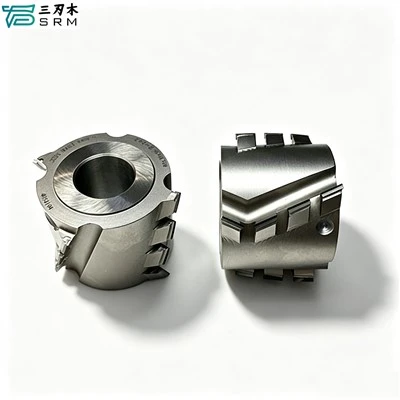
A compression router bit only earns its price when the geometry matches the material, and that starts with your numbers, not a catalog. Send us your panel thickness, your material type, your spindle speed and feed, and whether both faces need clean edges, and our engineers will recommend the diameter, the flute length, and the shank before you order. Our compression bits with chip breakers and 2-flute compression router bits are built for plywood, melamine, and laminated panels, with custom flute lengths on request. Check the compression router bit product pages for the size table, or send your application details through our inquiry form, and get a bit that matches your panel instead of a guess.