






A woodworking distributor in Poland ordered 500 pieces of 1/4" spiral upcut router bit from a new supplier last year. When the cartons arrived, his QC team measured ten pieces. Five had shank diameters outside the printed spec, two showed runout over 0.05 mm, and the "2-flute" label did not match the uneven spacing between the cutting edges. The next order went through with a different spec sheet and the problems disappeared. The gap between a quote line and a finished cutting edge is where most of the cost of a spiral upcut router bit lives. This guide is for buyers who place the order, not woodworkers picking a bit for an afternoon of routing.
Flutes Decide Chip Removal and Feed Rate
The flute count is the first number to settle, because it sets how fast the spiral upcut router bit can feed and how clean the groove stays. A single-flute design leaves a wide chip channel, the fastest choice for deep slots in soft material. Two-flute spiral upcut router bit models are the CNC workhorse: they balance chip clearance and finish on plywood, MDF, and hardwood. Three-flute versions cut slower and finish finer for hard plastics and laminated panels, but clog sooner in deep cuts. State the flute count explicitly when you order. A 2-flute and a 3-flute spiral upcut router bit with the same diameter can differ in price by 15 to 25 percent, and the wrong choice shows up as burned edges or stalled feeds. Our guide on upcut vs downcut spiral router bits covers the cutting direction side of the decision.
Sizes: How to Write a Complete Size Spec
Most underspecification happens here. A complete spiral upcut router bit size line has four numbers: cutting diameter, cutting length, shank diameter, and overall length. "1/4 spiral upcut" is not a spec; it is a guess. Cutting diameter controls groove width and tool stiffness. Cutting length must clear your deepest pass, because a spiral upcut router bit with too short a flute pushes chips into a pocket and burns. Shank diameter must match the CNC collet, normally 1/4", 1/2", 8 mm, or 12 mm, and it sets how much torque the tool carries before deflection. Overall length matters for machines with limited Z clearance. Common series look like 1/4 x 3/4 x 1/4 or 1/2 x 1 x 1/2, plus 6 mm and 8 mm metric lines for European spindles. Put all four values on the RFQ and repeat them on the PO; the factory builds to the last complete line they receive.
Material and Coating: Solid Carbide vs PCD
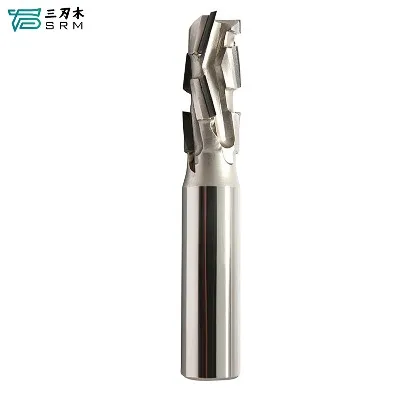
A spiral upcut router bit is only as good as the carbide behind the edge. Solid carbide blanks are the CNC standard: one piece of ground carbide keeps concentricity tight at high speed. Brazed or welded tips are cheaper but shift under load, and they show up as chatter on the first long run. For wood and panels, look for micrograin C3 carbide, which holds an edge through abrasive MDF glue lines. Coatings are a separate decision. TiAlN-coated tools resist aluminum and plastic buildup, while an uncoated spiral upcut router bit often outlasts a coated one on clean wood because there is no coating layer to wear through. For carbon fiber and other abrasive composites, the answer is PCD, a different price class entirely. Ask the factory whether the bit is solid or tipped, which grade, and whether any coating is applied. If the quote only says "carbide," you are not comparing products yet. Spiral router bits explained covers the full family if you want the background.
Tolerances and Balance: The Numbers That Cost You
Tolerance is where a cheap spiral upcut router bit reveals itself. The shank should hold an h6 tolerance, which for a 1/2" shank means zero to minus 0.011 mm. Total indicated runout, the TIR measured at the cutting edges, should sit at or below 0.02 mm on a new tool. At 18,000 to 24,000 rpm, a wobbling spiral upcut router bit turns into surface waviness, shortened bearing life, and broken tips on the first deep pass. Balance is the second half: a factory that balances its tools above 12,000 rpm can say so in writing, and a factory that cannot will not mention it. When a batch arrives, measure 3 to 5 percent of the carton. A micrometer on the shank, a dial indicator on the edges, and a visual check of the flutes take ten minutes and tell you more than any certificate.
What the Quote Should Tell You
A serious quote for a spiral upcut router bit answers five things beyond unit price. The quantity ladder, so you can see where the price drops. The MOQ, which for a factory-direct order usually starts around a few hundred pieces. The lead time, quoted in weeks from confirmation, not from payment. The packaging, because loose tools in a box arrive with nicked edges, and single-piece cards or foam trays protect flutes in transit. And the failure policy, meaning what happens when a batch fails your incoming inspection. Ask for a sample or test batch before the full order, and ask the factory to state its TIR limit and grade on the quotation. Comparing two quotes by unit price alone is comparing unknowns; comparing them by qualified spec, sample result, and lead time is comparing products.
Receiving Inspection and Test Cuts
Plan the receiving check before the carton arrives. Measure the shank diameter on a sample with a micrometer, check TIR with a dial indicator, and confirm cutting length against the PO. Then cut. On a clean piece of MDF, a good upcut bit lifts chips out of the groove without burning the walls and leaves a smooth floor. On aluminum, watch for edge buildup on the flutes and listen for vibration at normal feed. Record the reject rate from every batch; that number is your leverage at the next negotiation. A supplier that ships 2 percent bad tools is ten times more expensive than one that ships 0.2 percent, once scrap, rework, and downtime are added to the price.
The Order Checklist Before You Commit
Before you sign, put these seven lines in the RFQ and make the supplier answer in writing. Complete size spec with all four dimensions. Flute count and geometry. Solid or tipped construction, carbide grade, and coating. Shank tolerance and TIR limit. MOQ, quantity ladder, and lead time. Sample or test batch before full production. Reject and replacement policy. If the factory answers all seven without hedging, the spiral upcut router bit is worth testing. If the sales rep only wants to talk about price, keep the order small. When your target size, quantity, and market are clear, send your spiral upcut router bit spec through our inquiry page and we will confirm the drawing, tolerance, and lead time before you commit.