



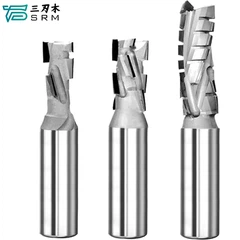
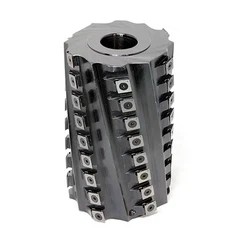
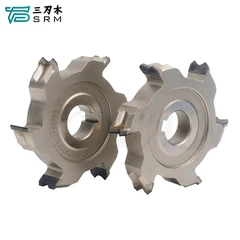
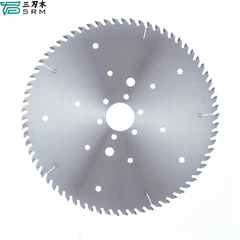
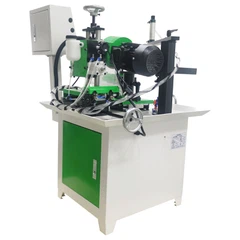

A frame saw blade is a remarkable tool with a long - standing history of utility in various industries, especially in woodworking and the processing of other materials. As a reliable supplier of frame saw blades, I am excited to delve into how these blades work and their significance in modern manufacturing.
1. Basic Structure of a Frame Saw Blade
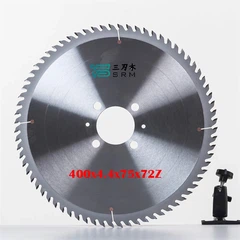
Before we understand how a frame saw blade works, it's essential to know its basic structure. A typical frame saw blade consists of a thin, flat strip of metal, usually high - carbon steel, tungsten carbide, or a combination of both. The blade has teeth along one or more edges. The teeth are the key components that interact with the material being cut. They come in different shapes and sizes, depending on the specific application of the saw blade. For example, cross - cut teeth are designed to cut across the grain of the wood, while rip - cut teeth are optimized for cutting along the grain.
2. The Mechanics of Cutting
The working principle of a frame saw blade is based on the concept of mechanical cutting. When the saw blade is set in motion, the teeth of the blade come into contact with the material. As the blade moves forward, the teeth dig into the material, removing small chips or particles. This process is repeated continuously as the blade advances, gradually creating a cut in the material.
The cutting action is a combination of shearing and tearing forces. The shape of the teeth significantly influences these forces. For instance, in a blade with sharp, pointed teeth, the initial penetration into the material is more like a piercing action. As the blade moves, the teeth then shear through the material, effectively separating it. On the other hand, blades with more rounded or chisel - shaped teeth rely more on a tearing action to remove material.
3. Power Source and Movement
Frame saw blades can be powered in various ways. In traditional setups, they were often operated manually, where a person would move the saw back and forth to make the cut. This required a great deal of physical strength and skill. However, in modern industrial settings, frame saw blades are usually powered by electric motors, hydraulic systems, or pneumatic devices.
The movement of the blade can be either reciprocating or continuous. In a reciprocating motion, the blade moves back and forth in a straight line. This type of motion is common in hand - held saws and some smaller industrial saws. The advantage of reciprocating motion is that it allows for more precise control, especially when making short or intricate cuts.
Continuous motion, on the other hand, involves the blade moving in a circular or oval path. Circular saws are a prime example of this type of movement. Continuous motion saws are generally more efficient for making long, straight cuts and are commonly used in large - scale manufacturing processes.
4. Applications of Frame Saw Blades
Frame saw blades have a wide range of applications across different industries. In woodworking, they are used for cutting lumber, making furniture, and creating decorative woodwork. For example, when making a wooden cabinet, a frame saw blade can be used to cut the boards to the appropriate size.
In the stone industry, frame saw blades are used to cut marble, granite, and other types of stone. These blades are often made with diamond - tipped teeth, as diamond is one of the hardest materials on Earth and can effectively cut through the tough stone.


Another important application is in the metalworking industry. Frame saw blades can be used to cut through various metals, such as aluminum, steel, and copper. Different blade materials and tooth designs are used depending on the type of metal and the cutting requirements.
5. Types of Frame Saw Blades and Their Features
There are several types of frame saw blades, each with its own unique features and applications.
Grooving Saw Blade
The Grooving Saw Blade is designed specifically for creating grooves in materials. These blades usually have a narrow profile and sharp teeth. In woodworking, they are used to create channels for joints, such as tongue - and - groove joints. The precise cutting ability of a grooving saw blade ensures that the grooves are of uniform width and depth, which is crucial for a proper fit in the joint.
Edge Banding Saw Blade
The Edge Banding Saw Blade is used in the woodworking industry for trimming and shaping the edges of wood panels. When a wood panel is edge - banded, a thin strip of veneer or plastic is applied to the edge to improve its appearance and durability. The edge banding saw blade is used to cut the excess banding material and create a clean, smooth edge. It has a special tooth design that can cut through both the wood and the banding material without causing chipping or splintering.
Scoring Saw Blade
The Scoring Saw Blade is often used in conjunction with a main saw blade. Its primary function is to make a shallow cut on the material before the main cut is made. This helps to prevent chipping and splintering on the surface of the material. In woodworking, scoring saw blades are commonly used when cutting plywood or other laminated materials. The initial score cut weakens the surface layer, allowing the main saw blade to make a cleaner cut through the material.
6. Maintenance and Longevity
To ensure the proper functioning and longevity of a frame saw blade, regular maintenance is essential. After each use, the blade should be cleaned to remove any sawdust, resin, or other debris that may have accumulated on the teeth and the blade surface. This can be done using a brush or a cleaning solution specifically designed for saw blades.
The blade should also be sharpened regularly. Dull teeth can cause the saw to work harder, resulting in slower cutting speeds and a poorer quality cut. There are various sharpening tools available, such as files and sharpening stones. However, for more precise sharpening, professional sharpening services may be required.
In addition, proper storage of the saw blade is important. The blade should be stored in a dry, clean place to prevent rusting and corrosion. It can be stored in a blade case or hung on a wall using a blade holder.
7. Why Choose Our Frame Saw Blades
As a leading supplier of frame saw blades, we offer high - quality products that are designed to meet the diverse needs of our customers. Our blades are made from the finest materials, ensuring durability and long - lasting performance. We have a team of experienced engineers and technicians who continuously research and develop new blade designs and technologies to improve cutting efficiency and quality.
We also provide excellent customer service. Our team is always ready to answer your questions, offer technical support, and help you choose the right saw blade for your specific application. Whether you are a small - scale woodworker or a large - scale industrial manufacturer, we have the right solution for you.
8. Conclusion
In conclusion, frame saw blades are versatile and essential tools in many industries. Their unique working mechanism, combined with the variety of blade types available, allows for precise and efficient cutting of different materials. Understanding how these blades work can help you make informed decisions when choosing a saw blade for your application.
If you are in the market for high - quality frame saw blades, we encourage you to contact us for a consultation. Our team of experts will be happy to assist you in finding the perfect blade for your needs. Whether you need a Grooving Saw Blade, an Edge Banding Saw Blade, or a Scoring Saw Blade, we are here to provide you with the best products and services.
References
- Smith, J. Woodworking Tools: A Comprehensive Guide. Woodworker's Press, 2018.
- Johnson, A. Industrial Cutting Technologies. Manufacturing Insights, 2020.
- Lee, S. Stone Cutting and Processing Techniques. Geological Publishing, 2019.


