







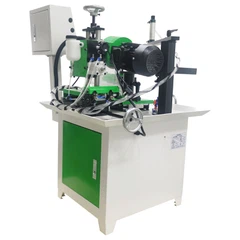

Hey there! As a supplier of Compression Bits, I often get asked about the algorithms used for compressing bits. It's a fascinating topic, and I'm excited to share some insights with you.
First off, let's understand what compression bits are. Compression bits are tools used in various machining processes, like cutting, shaping, and milling. They're designed to provide a clean and precise cut, and they're widely used in industries such as woodworking, plastics, and composites.
Now, when it comes to compressing bits, there are several algorithms at play. One of the most common ones is the Huffman coding algorithm. Huffman coding is a lossless data compression algorithm. It works by assigning variable-length codes to input characters based on their frequencies. Characters that appear more frequently are assigned shorter codes, while those that appear less frequently get longer codes. This way, the overall size of the data can be reduced without losing any information.
Let's say you have a text file with a lot of 'e's and very few 'z's. Huffman coding would give 'e' a short code and 'z' a long code. When you compress the file, the 'e's take up less space, and the overall file size goes down. This algorithm is super useful in compressing digital data, and it has applications in everything from file compression software to image and video encoding.
Another important algorithm is the Lempel - Ziv - Welch (LZW) algorithm. LZW is also a lossless compression algorithm. It works by building a dictionary of strings that appear in the data. As it reads through the data, it replaces repeated strings with references to the dictionary. For example, if you have a long sequence of the same word in a text, LZW would replace that sequence with a single reference to the word in the dictionary. This reduces the amount of data that needs to be stored.
LZW is used in many file formats, like GIF images. GIFs use LZW compression to reduce their file size while maintaining the image quality. It's a great way to make digital content more manageable, especially when you're dealing with limited storage space or slow internet connections.


Run - Length Encoding (RLE) is yet another algorithm used for compression. RLE is a simple but effective algorithm that works by replacing consecutive repeated data elements with a single data value and count. For instance, if you have a series of 10 consecutive 'A's in a text, RLE would replace it with '10A'. This reduces the amount of data that needs to be stored. RLE is commonly used in image compression, especially for images with large areas of the same color.
Now, let's talk about how these algorithms relate to our Compression Bits. In the manufacturing process of our bits, data compression algorithms are used to optimize the design and production. For example, when we're creating 3D models of our bits, the data can be quite large. By using compression algorithms, we can reduce the file size of these models, making it easier to store, transfer, and work with them.
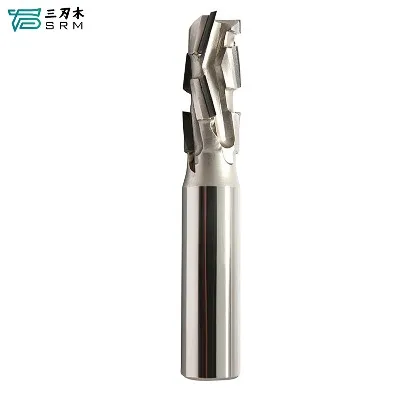
Our Spiral Milling Cutter is a prime example. The design data of this cutter is compressed using these algorithms, allowing us to quickly share the design with our manufacturing partners around the world. This speeds up the production process and ensures that we can deliver high - quality products in a timely manner.
Similarly, our Milling Bit for Neon Strip benefits from data compression. The precise design of this bit requires a lot of data, and compression algorithms help us manage that data efficiently. This means we can focus on improving the performance and quality of the bit without being bogged down by large data files.
Our Roughing End Mill Cutter also takes advantage of these algorithms. In the production process, we use compressed data to control the machining operations more accurately. This results in a more precise and consistent product, which is what our customers expect from us.
In addition to these well - known algorithms, there are also more advanced and specialized compression techniques. For example, arithmetic coding is a more sophisticated form of entropy coding. It assigns a single floating - point number to an entire message, rather than individual symbols like Huffman coding. This can lead to more efficient compression, especially for data with complex probability distributions.
There are also lossy compression algorithms, which are used when some loss of information is acceptable. For example, in audio and video compression, algorithms like MP3 and MPEG use lossy compression to significantly reduce the file size while still maintaining an acceptable level of quality. However, for our Compression Bits, we mainly focus on lossless compression because we need to preserve the integrity of the design and production data.
So, why should you choose our Compression Bits? Well, our use of advanced compression algorithms in the manufacturing process means that we can offer high - precision, high - quality bits at a competitive price. We're able to optimize our production process, reduce waste, and deliver products faster. Whether you're a small woodworking shop or a large industrial manufacturer, our bits can meet your needs.
If you're interested in learning more about our Compression Bits or want to discuss your specific requirements, we'd love to hear from you. Just reach out to us, and we can start a conversation about how our products can benefit your business. We're always happy to help and find the right solutions for you.
In conclusion, the algorithms used for compressing bits play a crucial role in our manufacturing process. From Huffman coding to LZW and RLE, these algorithms help us manage data more efficiently, improve product quality, and reduce costs. If you're in the market for high - quality Compression Bits, don't hesitate to get in touch with us. We're here to provide you with the best products and services.
References
- Sayood, K. (2006). Introduction to Data Compression. Morgan Kaufmann.
- Salomon, D. (2007). Data Compression: The Complete Reference. Springer.


