



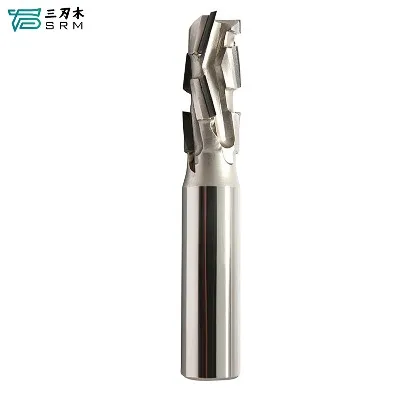

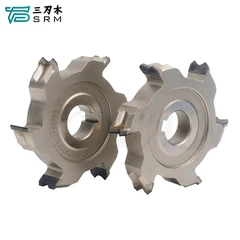



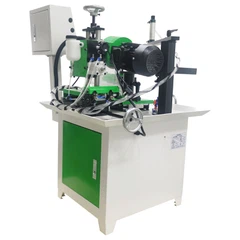

As a leading supplier of Trimming Cutterheads, I've witnessed firsthand the evolution of these essential tools in the woodworking and machining industries. In this blog, we'll explore the cutting - edge wear patterns of trimming cutterheads, understand their implications, and how our products at [Our Company] are designed to address these challenges.
Understanding the Basics of Trimming Cutterheads
Trimming cutterheads are a crucial component in various woodworking and machining operations. They are primarily used for precision trimming, shaping, and finishing of workpieces. The Trimming Cutterhead is designed to remove small amounts of material accurately, ensuring a smooth and clean surface.
The cutterhead consists of multiple cutting inserts arranged in a specific pattern around a central hub. These inserts are made from high - quality materials such as carbide, which provides excellent hardness and wear resistance. The design and arrangement of the inserts play a significant role in determining the performance and wear pattern of the cutterhead.
Cutting - Edge Wear Patterns
1. Flank Wear
Flank wear is one of the most common wear patterns observed in trimming cutterheads. It occurs on the clearance face (flank) of the cutting inserts. Flank wear is primarily caused by the friction between the flank of the insert and the workpiece material during the cutting process. As the cutterhead rotates and cuts through the material, the constant rubbing leads to the gradual removal of material from the flank of the insert.
The rate of flank wear depends on several factors, including the hardness of the workpiece material, cutting speed, feed rate, and the quality of the cutting insert. In general, harder workpiece materials and higher cutting speeds will result in faster flank wear. When flank wear reaches a certain level, it can affect the dimensional accuracy of the cut and the surface finish of the workpiece. The increased friction due to flank wear also leads to higher cutting forces, which can put additional stress on the cutterhead and the machine.
2. Crater Wear
Crater wear occurs on the rake face of the cutting insert. It is characterized by the formation of a crater - like depression on the rake face, which is caused by the high - temperature and high - pressure conditions at the chip - tool interface during the cutting process. The chips flowing across the rake face of the insert carry away small particles of the insert material, gradually forming the crater.
Crater wear can have a significant impact on the cutting performance of the cutterhead. As the crater deepens, it can change the geometry of the cutting edge, leading to increased cutting forces and poor chip control. In severe cases, crater wear can cause the cutting edge to break, resulting in tool failure and damage to the workpiece.
3. Chipping
Chipping is another common wear pattern that can occur on the cutting edges of the trimming cutterhead. It is characterized by the breakage of small fragments from the cutting edge. Chipping can be caused by several factors, including high - impact forces during the cutting process, sudden changes in the cutting load, or the presence of hard inclusions in the workpiece material.
Even small chips on the cutting edge can have a negative impact on the surface finish of the workpiece. The rough edges created by chipping can cause scratches and unevenness on the workpiece surface. Additionally, chipping can accelerate the wear of the remaining cutting edge, leading to premature tool failure.


4. Built - up Edge (BUE)
A built - up edge forms when small particles of the workpiece material adhere to the cutting edge of the insert. This typically occurs in materials with low thermal conductivity and high ductility. During the cutting process, the high - pressure and high - temperature conditions at the cutting edge cause the workpiece material to stick to the insert.
The presence of a built - up edge can change the effective geometry of the cutting edge, leading to poor surface finish and dimensional accuracy. As the built - up edge grows and eventually breaks off, it can also cause chipping of the cutting edge. BUE is more likely to occur at lower cutting speeds, and it can be minimized by using appropriate cutting fluids and optimizing the cutting parameters.
How Our Trimming Cutterheads Address Wear Patterns
At [Our Company], we understand the importance of minimizing wear patterns in trimming cutterheads. Our products are designed with the latest technologies and materials to ensure long - lasting performance.
1. High - Quality Inserts
We use only the highest - quality carbide inserts in our Trimming Cutterhead. These inserts are manufactured with precise geometries and coating technologies that enhance their hardness, wear resistance, and thermal stability. The advanced coatings reduce the friction between the insert and the workpiece, minimizing flank wear and crater wear.
2. Optimal Insert Arrangement
The arrangement of the inserts on our cutterheads is carefully designed to distribute the cutting forces evenly. This helps to reduce the impact of wear patterns such as chipping and ensures a more consistent cutting performance. Our engineers use advanced simulation and testing techniques to optimize the insert layout for different applications.
3. Robust Design
Our cutterheads are constructed with a robust design that can withstand the high - stress conditions of the cutting process. The central hub and the mounting features are designed to provide maximum stability, reducing the vibrations that can contribute to premature wear. Additionally, our cutterheads are easy to maintain and re - insert, allowing for quick and cost - effective replacement of worn inserts.
Other Related Cutterheads We Offer
In addition to our trimming cutterheads, we also offer a wide range of other cutterheads for various woodworking and machining applications.
Planer Cutterheads
Our Planer Cutterhead is designed for high - volume material removal and surface planning. It features a large number of cutting inserts arranged in a spiral pattern, which provides a smooth and efficient cutting action. The planer cutterhead is suitable for both softwood and hardwood applications, and it can achieve excellent surface finishes.
Cutter Heads for Rabbeting
For rabbeting operations, we offer specialized Cutter Heads for Rabbeting. These cutterheads are designed to create precise rabbets, grooves, and dados in wood and other materials. The unique design of our rabbeting cutterheads ensures accurate depth and width control, making them ideal for cabinet - making, furniture manufacturing, and other fine - woodworking applications.
Contact Us for Procurement and Consultation
If you are in the market for high - quality trimming cutterheads or any of our other cutterhead products, we invite you to contact us for a consultation. Our team of experts is ready to assist you in choosing the right cutterhead for your specific application. We can also provide detailed information on product specifications, performance, and pricing.
Don't miss out on the opportunity to improve your machining operations with our cutting - edge cutterhead technology. Reach out to us today and take the first step towards enhancing your productivity and product quality.
References
- Stephenson, D. A., & Agapiou, J. S. (2006). Metal Cutting Theory and Practice. CRC Press.
- Trent, E. M., & Wright, P. K. (2000). Metal Cutting. Butterworth - Heinemann.
- Shaw, M. C. (2005). Metal Cutting Principles, 2nd Edition. Oxford University Press.


