









Hey there! As a supplier of trimming saw blades, I often get asked a bunch of questions from customers. One question that pops up quite a bit is, "Can a trimming saw blade be used for cutting curves?" Well, let's dig into this topic and find out.
First off, let's understand what a trimming saw blade is. Trimming saw blades are designed mainly for making precise cuts on various materials. They're super handy for tasks like trimming edges, cutting small pieces, and doing detailed work. They usually have a sharp and thin design, which allows for accurate and clean cuts.
Now, onto the big question: Can they cut curves? The short answer is yes, but it depends on a few factors.
Blade Design and Tooth Configuration
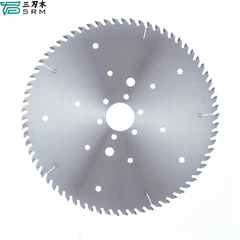
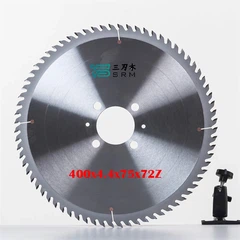
The design of the trimming saw blade plays a huge role in its ability to cut curves. Blades with a fine tooth configuration are generally better for cutting curves. Fine teeth make smaller cuts, which gives you more control when you're trying to follow a curved path. They also produce a smoother finish on the cut edge.
For example, if you're using a trimming saw blade with large, widely - spaced teeth, it might be more difficult to cut curves. These blades are better suited for straight cuts or rough cutting. On the other hand, a blade with a high tooth count, say 80 or more, will give you a better chance of making clean, curved cuts.
Material Being Cut
The type of material you're cutting also affects whether a trimming saw blade can cut curves effectively. Soft materials like wood, especially plywood or MDF, are relatively easy to cut curves with a trimming saw blade. The blade can glide through the material smoothly, and you can guide it along the curve without too much resistance.
However, when it comes to harder materials like metal or thick plastic, cutting curves becomes more challenging. These materials require a blade with more durability and a specific tooth design to handle the stress of cutting. For instance, Saw Blade for Acrylic is specially designed to cut acrylic, and it has a tooth configuration that can handle the unique properties of this material. If you're trying to cut curves in acrylic, using the right blade is crucial.
Saw and User Skill
The saw you're using in combination with the trimming saw blade matters too. A saw with good maneuverability and control will make it easier to cut curves. For example, a handheld circular saw with a variable speed setting can be adjusted according to the material and the curve you're trying to cut.


Your skill as a user also plays a significant part. Cutting curves requires a steady hand and the ability to follow a pattern accurately. If you're new to cutting curves, it might take some practice to get the hang of it. Start with simple curves on a scrap piece of material to build your confidence.
Advantages of Using a Trimming Saw Blade for Curves
There are several advantages to using a trimming saw blade for cutting curves. One of the main benefits is the precision it offers. Since trimming saw blades are designed for detailed work, they can make very accurate cuts, which is essential when you're creating intricate curves.
Another advantage is the smooth finish. As mentioned earlier, fine - toothed trimming saw blades can leave a clean and smooth edge on the cut material. This is especially important if you're working on a project where the appearance of the cut edge matters, like in woodworking or crafting.
Limitations
Of course, there are some limitations. Trimming saw blades are not as powerful as some other types of saw blades. If you're trying to cut very thick or hard materials in complex curves, you might run into issues. The blade could overheat or wear out quickly, and it might be difficult to maintain the desired curve.
Also, the size of the blade can be a limiting factor. Smaller trimming saw blades might not be suitable for cutting large - scale curves. You need to choose a blade size that is appropriate for the project you're working on.
Other Types of Blades for Comparison
There are other types of saw blades that are commonly used for cutting curves, such as jigsaw blades and band saw blades. Jigsaw blades are very flexible and can cut tight curves easily. They're great for detailed work and can be used on a variety of materials. Band saw blades, on the other hand, are ideal for cutting large, smooth curves. They have a continuous loop of teeth that can make long, uninterrupted cuts.
However, trimming saw blades have their own unique advantages. They're more versatile in some ways because they can be used for both straight and curved cuts on a variety of materials. And if you already have a circular saw, using a trimming saw blade is a convenient option.
Tips for Cutting Curves with a Trimming Saw Blade
If you decide to use a trimming saw blade for cutting curves, here are some tips to help you out:
- Mark your curve: Use a pencil or a template to mark the curve you want to cut on the material. This will give you a clear guide to follow.
- Start slow: Begin cutting at a slow speed, especially if you're new to cutting curves. This will give you more control and reduce the risk of making mistakes.
- Use a guide: You can use a straight edge or a guide to help you keep the saw on track. This is especially useful for larger curves.
- Keep the blade sharp: A sharp blade will make the cutting process easier and give you a better finish. Make sure to replace the blade when it starts to dull.
Conclusion
So, can a trimming saw blade be used for cutting curves? Absolutely! With the right blade design, material selection, saw, and user skill, you can use a trimming saw blade to create beautiful curves. Whether you're a DIY enthusiast or a professional woodworker, a trimming saw blade can be a valuable tool in your arsenal.
If you're interested in purchasing trimming saw blades or Scoring Saw Blade or Edge Banding Saw Blade for your projects, feel free to reach out. We're here to help you find the right blade for your needs and to answer any questions you might have.
References
- Woodworking Magazine, "Guide to Saw Blades", 2023
- DIY Handbook, "Cutting Curves with Different Saw Blades", 2022


